You opened the fridge this morning and found a puddle spreading across your kitchen floor – nobody wants to start their day like that. This guide walks you through the most common reasons a refrigerator leaks water and what you can actually do about each one. Refrigerator leaks are one of those problems that seem alarming at first, but usually have a pretty straightforward explanation. The tricky part is figuring out which of several possible causes you’re dealing with – because the fix for a clogged drain is completely different from the fix for a cracked water line. At Appliance Repair Coquitlam, we get calls about this regularly, and the good news is that many of these issues can be resolved without major expense or a full service call. Coquitlam’s climate doesn’t help matters. The damp winters and fluctuating temperatures mean appliances work harder, and older homes – particularly in areas like Maillardville where you’ll find a lot of well-established housing stock – can have fridges running in less-than-ideal conditions. A little moisture in the air goes a long way toward making a borderline problem into an actual leak.
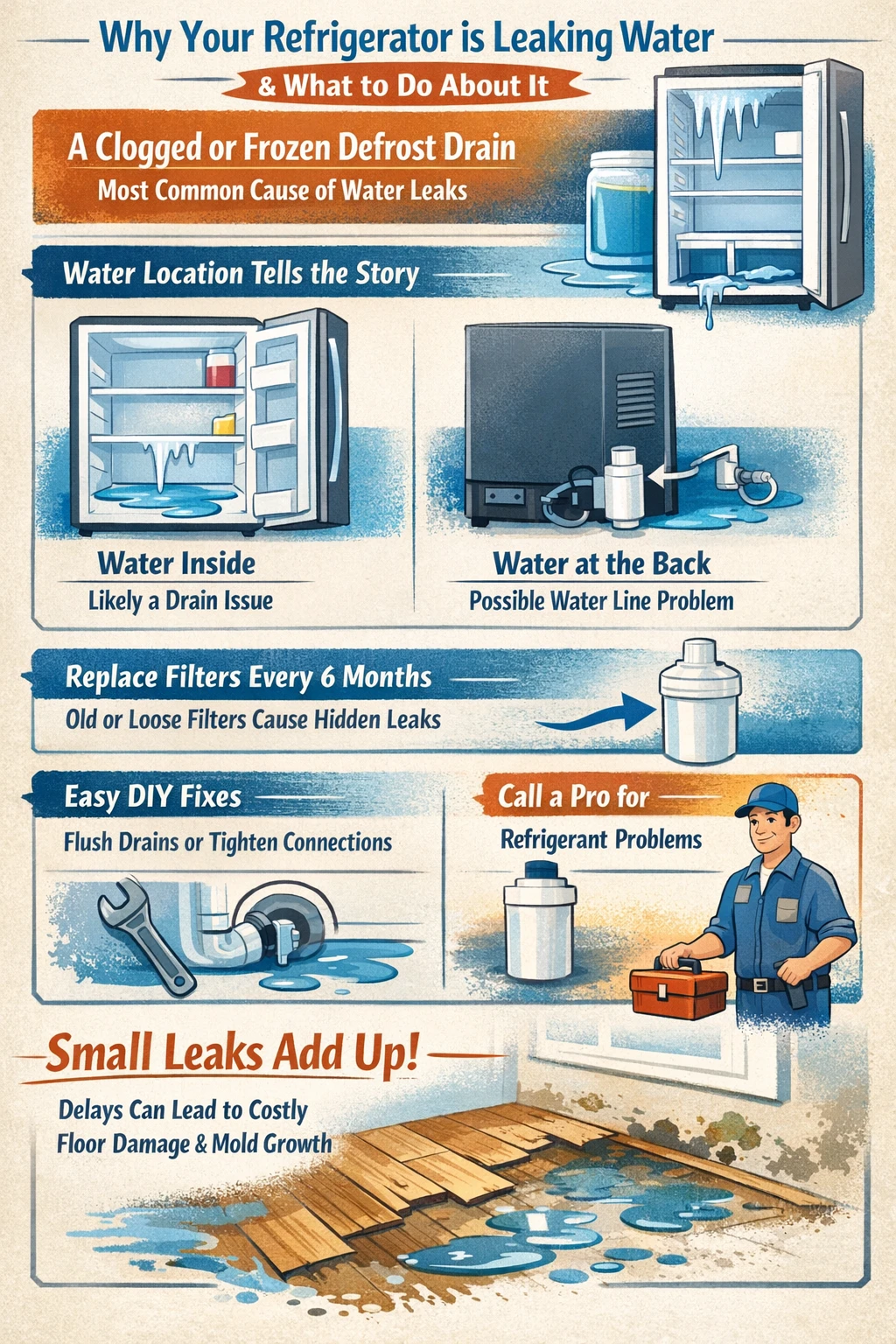
Key takeaways
- A clogged or frozen defrost drain is the single most common cause of water pooling inside or under a refrigerator.
- Where the water appears – inside the fridge, under it, or at the back – tells you a lot about what’s causing it.
- The FDA recommends keeping your refrigerator at 40 degrees Fahrenheit (4 degrees Celsius) or lower; temperatures that stray outside this range can contribute to frost buildup and drain problems.
- Water filters should be replaced roughly every six months – a cracked or improperly seated filter is a surprisingly common source of leaks that gets overlooked.
- Some fixes, like flushing a drain or tightening a water line connection, are reasonable DIY jobs; others, like refrigerant issues or internal component failures, need a professional.
- Left unaddressed for weeks, a slow fridge leak can cause floor damage and mold growth that costs far more to fix than the original appliance problem.
Why is your refrigerator leaking water?
The most likely culprit is a blocked defrost drain. Every fridge goes through regular defrost cycles, and the meltwater from those cycles has to go somewhere – down a drain tube, into a pan near the compressor, where it evaporates. When that drain gets clogged with food debris, mildew, or ice, the water backs up and finds another way out, usually onto your floor or pooling under the crisper drawers. It’s a common call we get, and in most cases it’s exactly what’s going on. 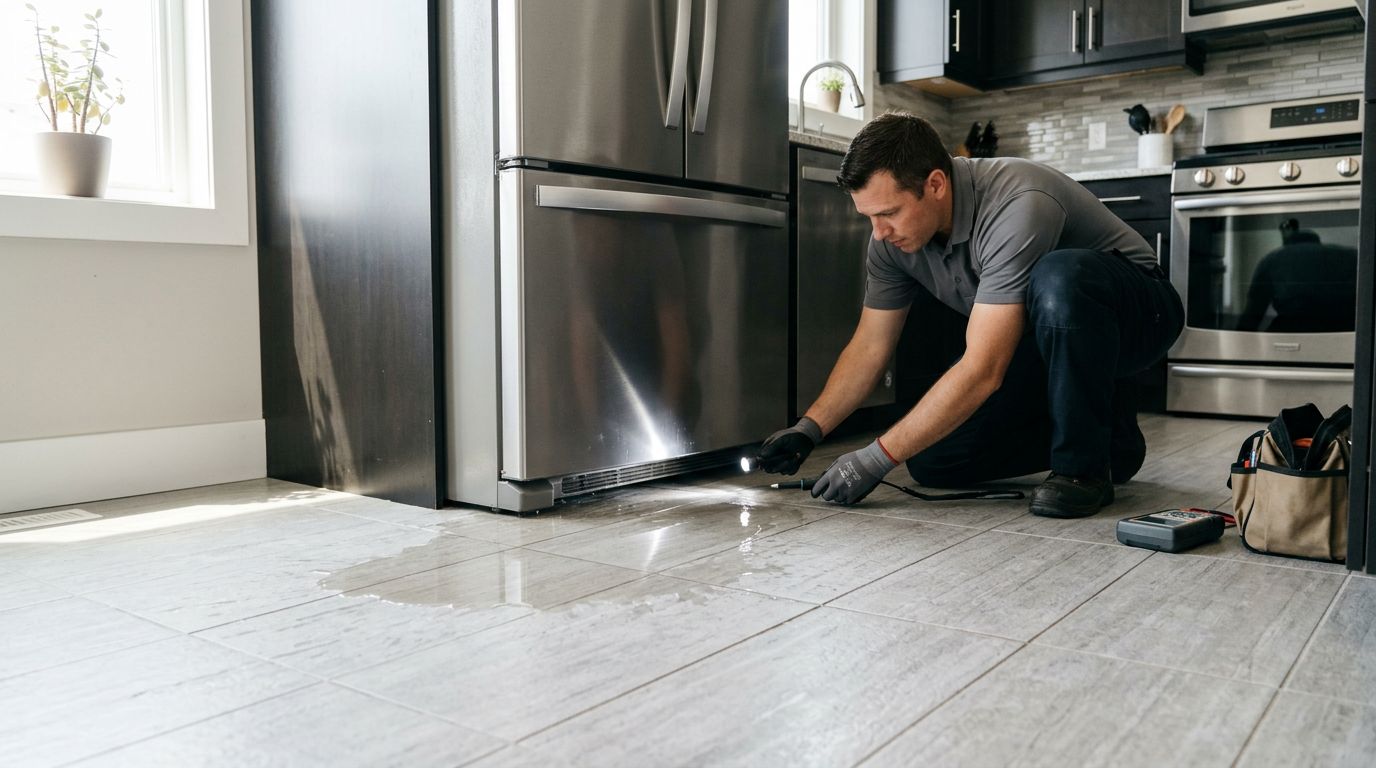 That said, it’s not the only possibility. A damaged water supply line, a worn door gasket, a cracked drain pan, or even high indoor humidity can all cause a fridge to leak. The location of the water is your first diagnostic clue. Water inside the fridge or under the produce drawers usually points to the defrost drain. Water at the back of the unit often means a water line or valve issue. Water pooling right at the center of the base usually involves the drain pan. We see all of these fairly often, and which one you’re dealing with matters because the fixes are genuinely different.
A clogged defrost drain – the usual suspect
This is where most refrigerator water leak investigations end up. The defrost drain is typically located at the bottom of the freezer compartment, behind a back panel. During the defrost cycle, ice on the evaporator coils melts and drains through this tube down to the pan at the bottom of the fridge. If the tube gets blocked – by a stray food particle, a buildup of ice, or mildew – water overflows instead of draining. One Reddit user described waking up every morning to water on the floor, with no obvious source. The diagnosis from people who’d been through it themselves: frozen or clogged defrost drain, almost without exception. One person found a single frozen pea sitting on the drain hole. Another had a cranberry. A bit of mildew buildup is probably the more typical offender. 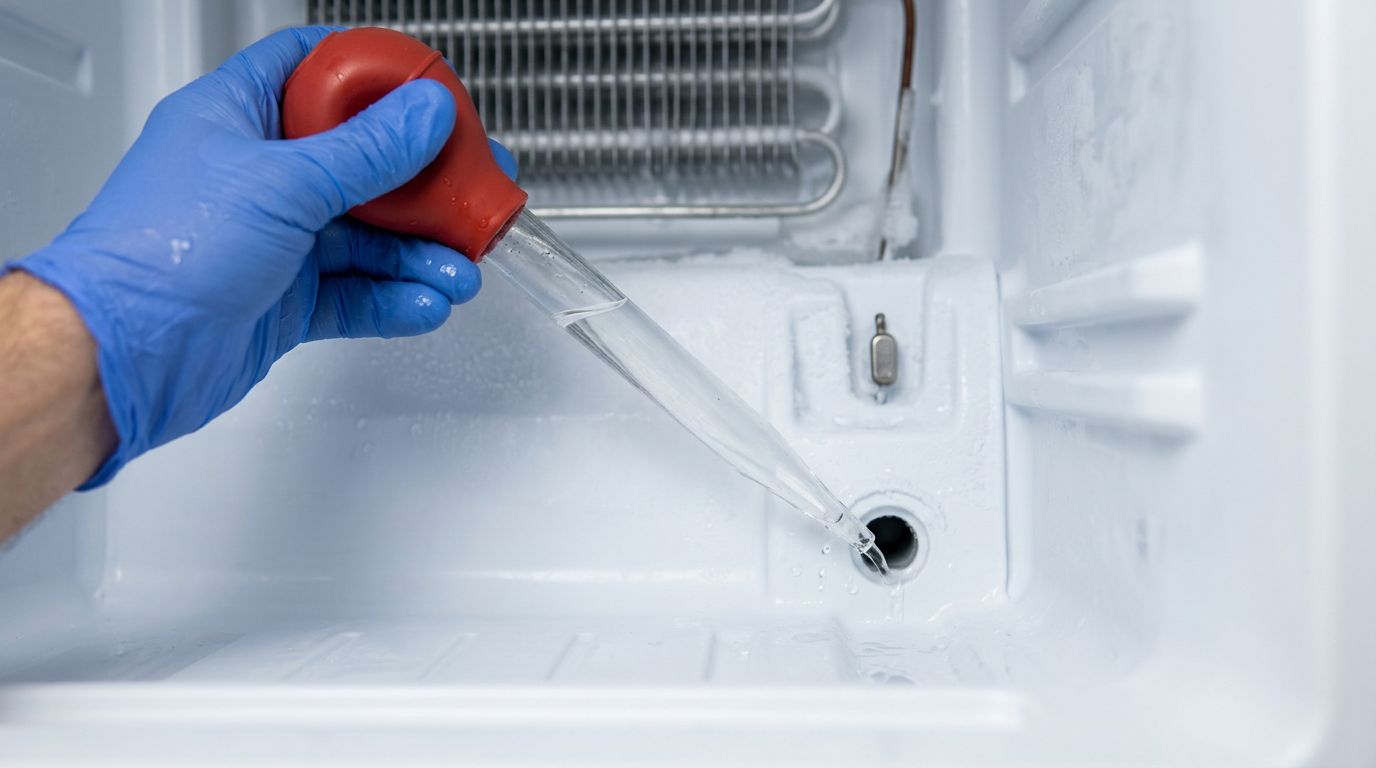 Clearing a defrost drain yourself is doable if you’re comfortable pulling out the freezer’s back panel. You can flush the drain with hot water using a turkey baster, or carefully work through it with something flexible – trimmer line, a pipe cleaner, or a straightened wire hanger. Some people have had good results using boiling water followed by suction from a shop vac. If the drain is frozen solid rather than just clogged with debris, a hair dryer aimed at the area for 30 to 60 minutes can thaw things out.
When the drain keeps refreezing
If you clear the drain and the problem comes back within a few weeks, something else is likely going on. A failed defrost heater, a malfunctioning defrost timer, or a stuck thermostat can all cause the drain to refreeze repeatedly. One creative fix involves running a short length of bare copper wire from the defrost heater coil into the drain opening – the residual heat during defrost cycles keeps ice from forming at the top of the tube. That’s more of a workaround than a proper repair, but it illustrates how interconnected these components are. Modern fridges use a microprocessor to control defrost cycles rather than a mechanical timer, which means a control board issue can sometimes be behind recurring freezing problems. That’s typically a job for someone with diagnostic tools.
The water supply line and ice maker
If your fridge has a water dispenser or ice maker, there’s a water supply line running to the back of the unit. This is usually a plastic or braided hose connected to a valve, and over time those connections can loosen or the tubing can develop small cracks. Pull the fridge away from the wall and wipe the water lines and connections with a dry paper towel – if it comes back wet, you’ve found your leak. Tightening a loose connection is a simple fix. Replacing a section of damaged tubing requires a bit more confidence, but the parts are inexpensive and instructions are easy to find for most models. The U.S. Department of Energy notes that water-using appliances account for a significant share of home water consumption, so even a slow drip from a supply line is worth fixing promptly. Ice maker leaking water is a slightly different problem. Sometimes the ice maker overfills because of a faulty water inlet valve. Sometimes air trapped in the water line after a filter change or water shutoff causes dripping from the dispenser. If your ice maker recently had the water supply interrupted – say, during a renovation or a plumbing repair – give it a day to normalize before assuming something is broken. A cracked or improperly installed water filter is another thing people often overlook. If you changed the filter recently and the leak started shortly after, check that the filter is fully seated and undamaged. It’s a quick check that solves the problem more often than you’d expect.
Door gaskets, condensation, and humidity
The rubber seal that runs around your fridge door does a lot of quiet work. When it’s in good shape, it keeps warm moist air out. When it’s worn, cracked, or misaligned, warm air sneaks in every time you close the door, condenses on the cold interior surfaces, and eventually drips or pools somewhere it shouldn’t. The classic test: close the door on a piece of paper or a dollar bill. If you can pull it out without any resistance, the seal isn’t doing its job. A dirty gasket can sometimes be restored with a good scrub using warm soapy water – grime on the rubber prevents it from making full contact. But a gasket that’s cracked or has lost its shape needs to be replaced. You’ll need to find the right gasket for your fridge’s make and model, which is usually in the owner’s manual or available from the manufacturer. 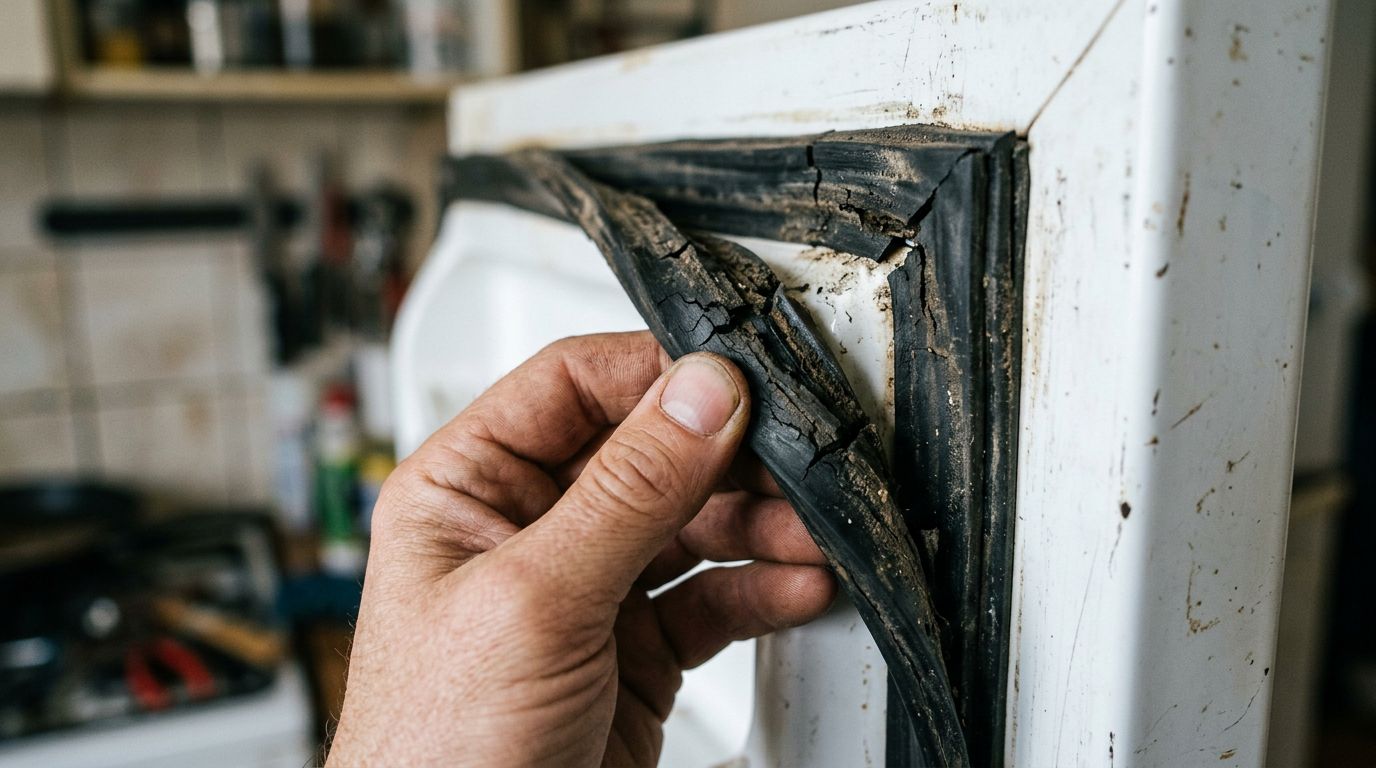 High indoor humidity compounds this problem. If your kitchen tends to run humid – and in wet seasons around Coquitlam, that’s not unusual – moisture gets into the fridge every time you open the door. Over time this can overwhelm the drain pan’s ability to evaporate, leading to overflow. A kitchen dehumidifier can help in chronic cases. One thing worth checking: make sure the fridge is level, or very slightly tilted back. If it’s tipped forward, the door may not swing fully closed on its own. Adjusting the front leveling feet so the back sits slightly lower than the front costs nothing and can solve a persistent condensation problem. Health Canada’s food safety guidelines also recommend keeping your fridge properly sealed and at a consistent temperature to prevent both leaks and food spoilage.
The drain pan and what happens when it fails
At the bottom of your fridge, usually behind a front kick plate or rear panel, sits a shallow drain pan. Its job is to collect the water that drips down from the defrost drain and hold it until it evaporates – helped along by the warmth from the compressor running nearby. Under normal conditions you’d never know it was there. If the pan cracks, the water goes straight to the floor instead of evaporating. If the pan overflows – which can happen in very humid conditions or if the fridge is running warmer than it should – same result. Pull the kick plate and take a look. A small amount of water in the pan is normal. A cracked pan, a pan that’s brimming full, or a pan that’s caked with debris and blocking airflow are all problems worth addressing. Replacing a drain pan is usually a simple parts swap. The challenge is finding the right part for your model – a detail that trips people up more than the actual installation does.
What to do when the source isn’t obvious
Sometimes you pull out the fridge, check the obvious things, and still can’t find where the water is coming from. A few less common possibilities worth ruling out: Water leaking from inside the walls of the fridge – behind sealed panels – usually indicates a problem with internal components like a pump or valve. That’s not a DIY repair. Similarly, if you notice the leak is accompanied by the fridge not cooling properly, or you hear unusual noises from the compressor area, you may be dealing with something more than a blocked drain. Refrigerant leaks are a separate category entirely and require a technician. If your fridge is a side-by-side or French door model and water is appearing in unexpected places, it helps to search for your specific model number along with the symptom – many brands have known failure patterns, and in some cases manufacturers have issued redesigned replacement parts. Maytag, KitchenAid, and Samsung models have all had documented drain-related issues with model-specific fixes available. We get calls from homeowners in Burke Mountain and other newer developments around Coquitlam where high-end refrigerators are common, and the pattern we see is that newer, more feature-rich appliances aren’t necessarily less prone to water leaks – they just have more components that can contribute to one.
Frequently asked questions
These are the questions we hear most often when people call about a refrigerator leaking water. The answers below are meant to help you figure out your next step, whether that’s a DIY fix or a call to a technician.
Can I fix a leaking refrigerator myself?
Many refrigerator water leaks are fixable without professional help. Flushing a clogged defrost drain, tightening a water supply connection, replacing a door gasket, or swapping out a cracked drain pan are all reasonable DIY tasks if you’re comfortable following instructions and working with your hands. The main requirement is being able to identify which problem you’re actually dealing with, which starts with noting where the water is appearing and under what circumstances. The fixes that go beyond DIY are those involving internal sealed components – anything behind permanently sealed panels, refrigerant-related issues, or problems with the control board. If you’ve worked through the common causes and the leak persists, that’s when calling in a technician makes more sense than continuing to troubleshoot.
Why does my fridge leak water only at night?
This pattern almost always points to the defrost cycle. Most fridges run their automatic defrost cycle during low-use periods, often overnight. If the defrost drain is blocked or frozen, the meltwater from that cycle has nowhere to go and ends up on the floor by morning. The overnight timing isn’t coincidental – it’s the defrost cycle doing its job, minus a functional drain. The fix is clearing the drain. If the problem keeps recurring on a roughly 24-hour cycle, something is causing the drain to refreeze between cycles, which may require looking at the defrost heater or thermostat.
How often should I maintain my fridge to prevent leaks?
A quick check every six months covers most of what matters. Replace the water filter on schedule (roughly every six months for most models with dispensers), inspect the door gasket for wear while you’re cleaning, and make sure the drain pan isn’t accumulating debris. Every year or so, pull the fridge away from the wall and wipe down the water lines to check for moisture. The defrost drain doesn’t need routine cleaning unless you’ve had a problem with it – but if you’ve had it clog once, it’s worth checking it annually since the conditions that led to the first clog tend to persist.
Is a leaking refrigerator dangerous?
A small, slow leak isn’t an immediate safety hazard, but it shouldn’t be ignored. Water near electrical components at the base of the fridge is a genuine concern, and water that sits on hardwood or laminate flooring for days causes damage that’s expensive to repair. Mold can develop under and behind the fridge if moisture persists for more than a week or two. The sooner you address the leak, the smaller the problem stays.
When should I call a professional instead of attempting a repair?
Call a professional if the water is coming from near the compressor or electrical components at the back of the unit, if you suspect a refrigerant leak (usually accompanied by a chemical smell and poor cooling), if internal components behind sealed panels seem to be involved, or if you’ve cleared the defrost drain and the problem keeps coming back within a week. Natural Resources Canada also recommends having appliances with cooling systems inspected by qualified technicians when performance issues arise alongside physical symptoms like leaks.
Wrapping up
A refrigerator leaking water usually comes down to one of a handful of problems: a blocked defrost drain, a water supply line issue, a worn door gasket, or a compromised drain pan. Start by noting where the water appears, and work through the most likely causes from there. Most of the common fixes are accessible to a careful homeowner, and catching the problem early keeps it from turning into a flooring or mold issue. If you’ve worked through the obvious causes and the leak is still happening, or if the repair involves components you’re not comfortable accessing, that’s where professional help makes sense. At Appliance Repair Coquitlam, we handle fridge repair across Coquitlam and the surrounding area – along with washer repair, dishwasher repair, stove repair, and other home appliance work. Give us a call and we’ll help you figure out what’s actually going on and what the most practical fix looks like.