Your refrigerator stopped making ice, and now you’re standing there staring at an empty bin wondering what went wrong. This guide walks you through the most common reasons a refrigerator ice maker stops working and shows you exactly what to check before calling anyone.Here in Coquitlam, we get a steady stream of calls about ice makers that suddenly quit. The Lower Mainland’s water quality plays a role in this more than people realize – mineral buildup from our municipal supply can clog water filters faster than the standard six-month recommendation, especially in homes that get heavy daily use. At Appliance Repair Coquitlam, we see ice maker issues regularly, and the good news is that most of them come down to a handful of fixable causes. Refrigerators are workhorses. We ask a lot of them, and the ice maker is one of the more complex little systems tucked inside. When it stops producing, it doesn’t always mean something expensive broke. Sometimes it’s a frozen fill tube. Sometimes someone bumped the shut-off arm without noticing. Let’s work through it systematically.
Key takeaways
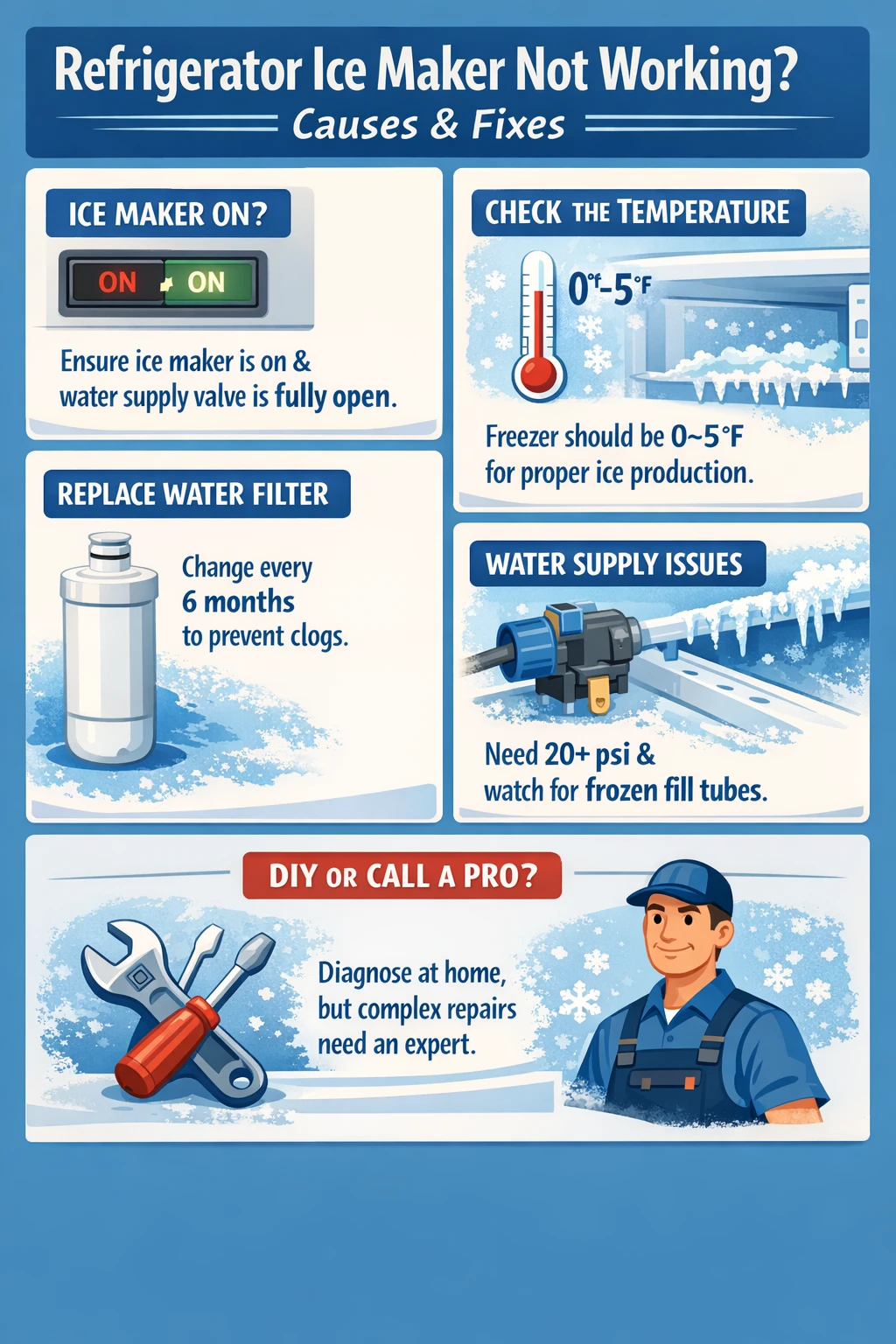
- The freezer needs to reach between 0 and 5 degrees Fahrenheit for the ice maker to cycle properly – anything warmer and production slows or stops entirely.
- A clogged water filter is one of the most common culprits, and filters should be replaced every six months under normal use.
- Water inlet valves require at least 20 psi of water pressure to open properly – below that threshold, the valve can’t feed water to the ice maker.
- A frozen fill tube behind the ice maker can stop water flow even when the dispenser still works fine.
- The ice maker control arm or shut-off switch is often accidentally bumped into the off position – always check this first.
- Many ice maker problems can be diagnosed and fixed at home without tools, but mechanical failures and sealed system issues usually need a technician.
Why your ice maker stopped working
Most ice makers stop working for one of four reasons: the freezer isn’t cold enough, water isn’t reaching the ice maker, the machine itself has a mechanical failure, or something got accidentally switched off. That covers the vast majority of cases. The tricky part is figuring out which one you’re dealing with.The ice-making process is actually pretty simple once you understand it. A timer triggers a water valve to fill a tray. Once the water freezes solid, a small heater loosens the cubes from the mold, and a motor with rotating arms pushes them into the storage bin. A shut-off arm senses when the bin is full and pauses the whole process. Any one of those steps failing brings the whole thing to a stop.In our experience, the most common calls we get are from homeowners who’ve checked everything obvious and still can’t figure it out – only to discover the water supply valve behind the fridge was partially closed, or the fill tube had iced over. One Reddit user described this exact situation: their plumber had turned off the water line to the ice maker while installing a dishwasher and never turned it back on. They sold the fridge thinking it was broken. Worth checking before you do anything else.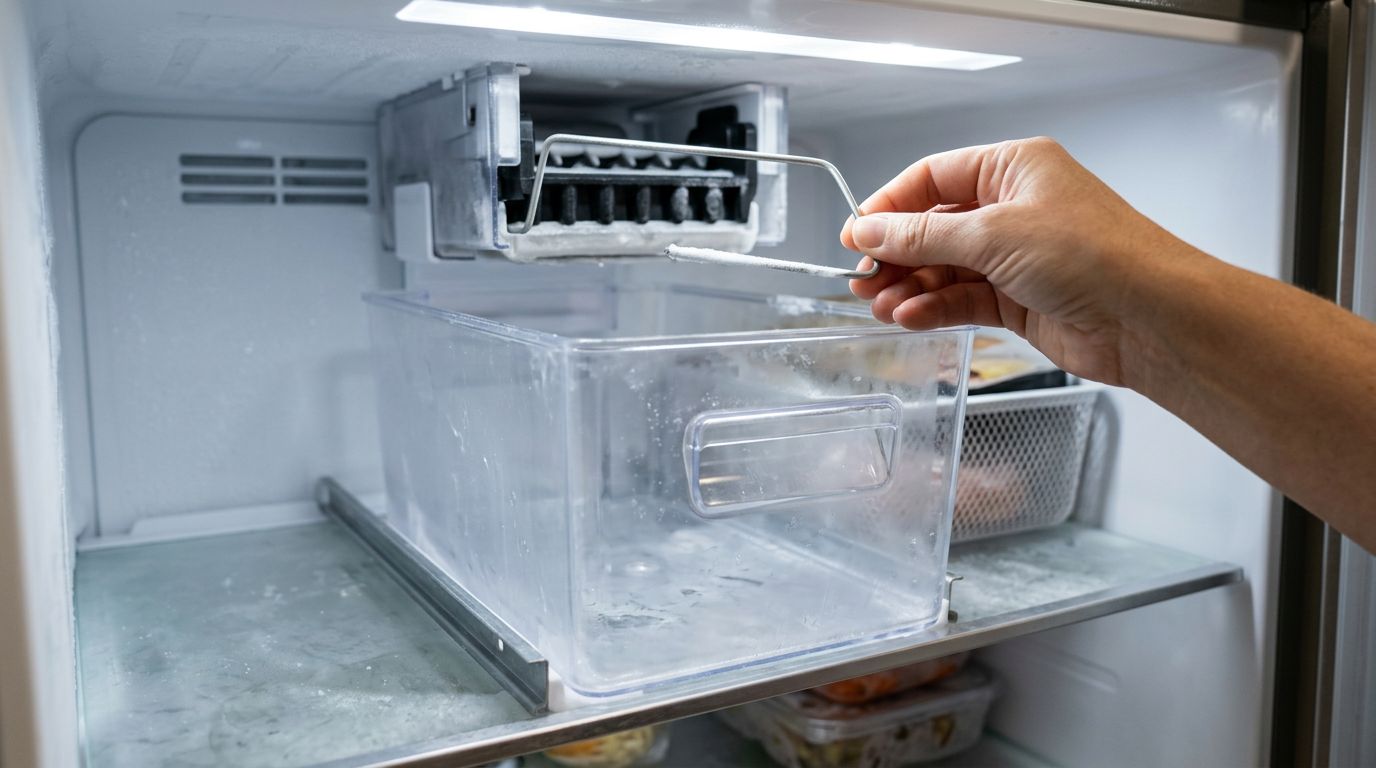
Check these things first
Before pulling anything apart, run through the basics. It sounds obvious, but these simple checks solve the problem more often than you’d expect.First, confirm the ice maker is actually turned on. The on/off switch or bail arm gets bumped during cleaning or when rearranging freezer contents. If your model has a control arm – that large plastic or metal handle resting beside the ice bin – make sure it’s in the lowered position. Raised means off. Also check the display panel if your fridge has one; the ice maker indicator light should be illuminated.Next, confirm the water supply valve behind the refrigerator is fully open. This valve is usually located where the water line connects to the wall. It should be turned all the way counterclockwise to open. Also check the water line itself for kinks – pushing the fridge too far back against the wall is a common way to pinch the line and restrict flow. The U.S. Department of Energy’s appliance guidance recommends leaving adequate clearance behind refrigerators for exactly this reason.Finally, make sure the ice bin is properly seated. Many refrigerators won’t start an ice-making cycle unless the bin is correctly positioned and the lever is locked in place. Pull it out, reseat it firmly, and check that any locking mechanism is engaged.
The freezer temperature problem
Temperature is the most overlooked cause of ice maker failure, and it’s worth spending a minute here because the numbers matter.The ice maker won’t start a harvest cycle unless the freezer reaches at least 16 degrees Fahrenheit. For consistent, normal ice production, you want the freezer set to 0 degrees Fahrenheit (-18 degrees Celsius). If it’s only getting down to 20 or 25 degrees, the ice maker will either produce very slowly or not at all. The fresh food compartment should be somewhere between 33 and 40 degrees Fahrenheit.Temperatures that are too low cause a different problem. Freezers set colder than -10 degrees Fahrenheit can cause ice cubes to freeze too quickly on the outside, triggering the thermostat to eject them before they’re fully solid in the middle – resulting in hollow or undersized cubes.If your freezer isn’t reaching its target temperature, check how full it is. A mostly empty freezer struggles to maintain stable temps because there’s less thermal mass to hold the cold. Filling it to about three-quarters capacity helps. Also check that the vents inside the freezer aren’t blocked by food packaging. If the temperature problem persists after those adjustments, you may have a sealed system issue – which is a job for a technician. We’ve seen this in older units around Austin Heights and Burke Mountain, where refrigerators from the mid-2010s are starting to show their age.
Water supply and filter issues
Water supply problems are probably the second most common cause of an ice maker that stopped working, and they break down into a few distinct issues.
Clogged water filter
A refrigerator water filter does exactly what you’re expect – it traps sediment, chlorine, and other particles from your tap water. Over time, it gets clogged. Manufacturer guidelines across brands consistently recommend replacing filters every six months. A clogged filter reduces the water pressure reaching the ice maker, which means less water per fill cycle, which means smaller cubes or no production at all. 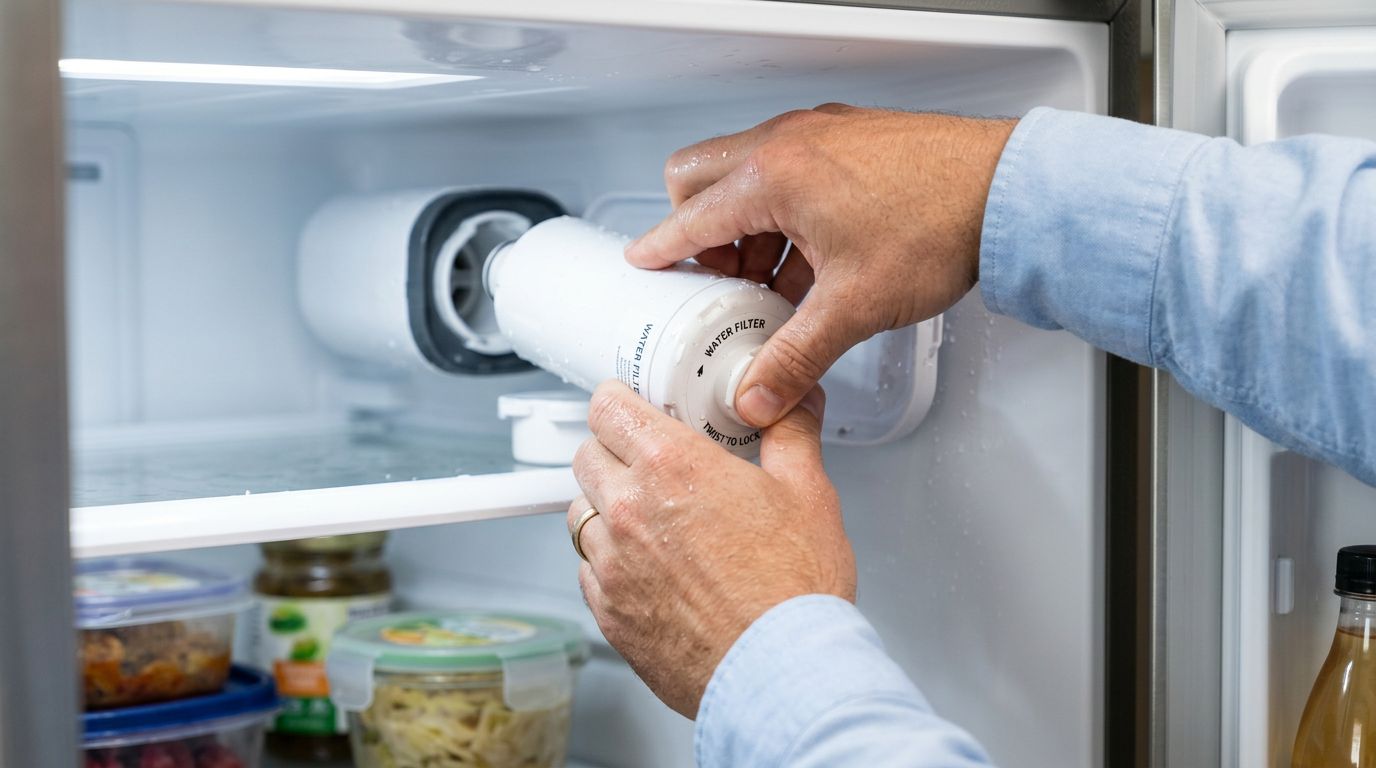 If you’re past the six-month mark, swap the filter. It’s a cheap fix and worth ruling out early. One thing to watch: after replacing the filter, run a few glasses of water through the dispenser to flush air from the lines. Air trapped in the new filter housing can cause a few empty ice cycles before things normalize.Also make sure the filter is seated correctly. An improperly installed filter creates the same restriction as a clogged one. Remove it and try dispensing water – if water flows freely without the filter installed, it confirms the filter is the problem.
Water inlet valve
The water inlet valve is the component that physically opens to let water flow into the ice maker when a fill cycle starts. It requires a minimum of 20 psi of water pressure to operate properly. Below that threshold, the valve can’t open fully, and the ice maker gets starved for water.If your home’s water pressure is fine but the dispenser works while the ice maker doesn’t, the inlet valve itself may have failed mechanically. Testing it properly requires a multimeter to check for continuity through the solenoid. If the solenoid has failed, the valve needs replacement. This is a repair most comfortable DIYers can handle, but if you’re not sure, it’s a reasonable point to bring in a professional.
Frozen fill tube
The fill tube is a small plastic or rubber tube that delivers water from the inlet valve to the ice maker mold. It runs through or near the freezer wall, and it can freeze solid – especially if freezer temperatures have been set too cold or if there’s been a recent temperature fluctuation.Here’s what makes this one confusing: the water dispenser can work fine even when the fill tube is frozen, because they pull from different parts of the water line. So a working dispenser doesn’t rule out a frozen tube. If you suspect this, the most common approach is to use a hair dryer on low heat directed at the tube – carefully, keeping the dryer away from any water. Some people use warm water in a turkey baster to thaw it. Once thawed, run a few dispenser cycles to clear any remaining blockage. Whirlpool’s product support documentation notes that this type of freeze is more likely when the freezer temperature is set lower than recommended.
Mechanical failures inside the ice maker
If the temperature is right, the water supply is good, and the filter is fresh, you’re likely looking at something mechanical. 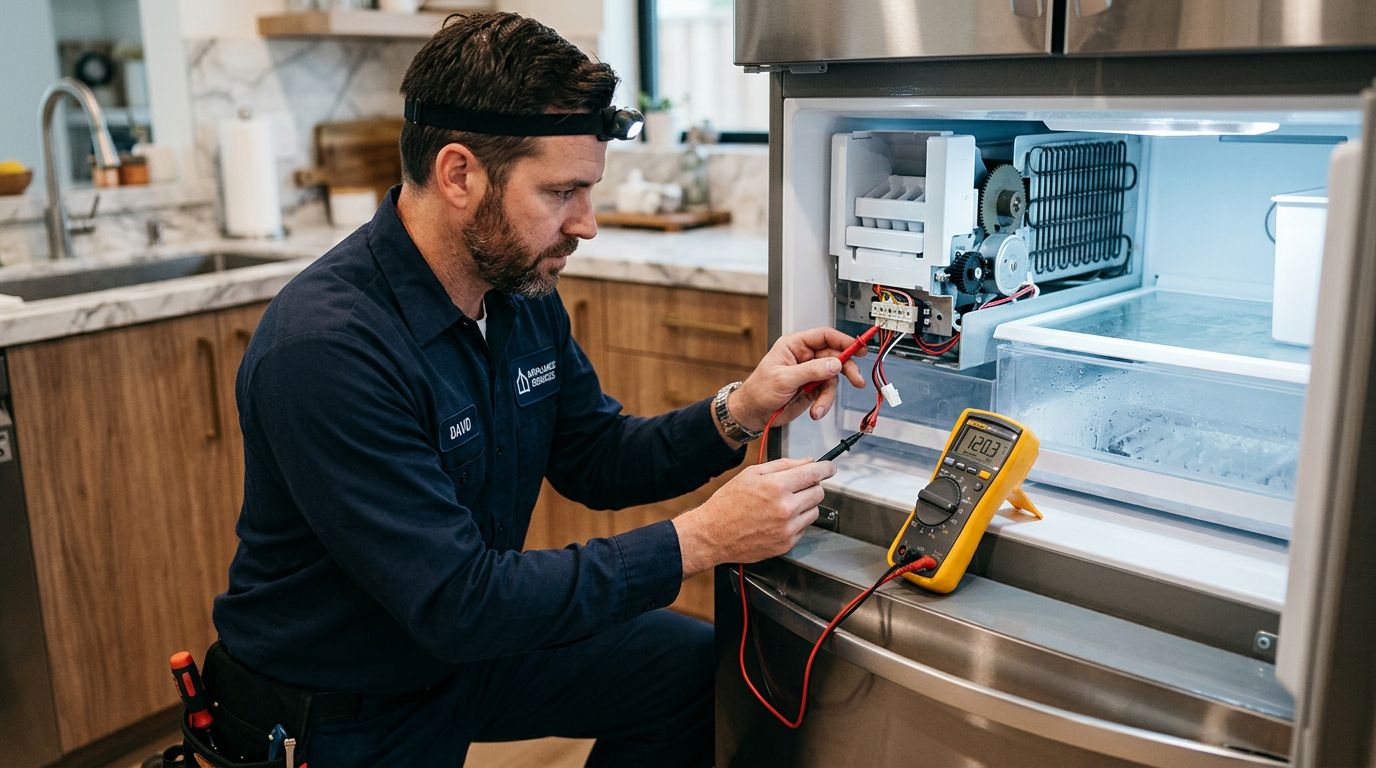 The motor that drives the ice ejection cycle can fail. The thermistor that tells the system when water has frozen solid can malfunction. The heating element that loosens cubes from the mold can burn out. Any of these stops the cycle cold.One way to test whether the ice maker itself is the issue is to trigger a manual harvest cycle. On many models, you can do this by removing the front cover and jumping two test points labeled “T” and “H” with a piece of wire, while holding the door switch in (or taping it down). The ice maker should run through a complete cycle – arms rotating, then a water fill at the end. If nothing happens, the motor is likely failed. If the arms move but no water comes in, you’re back to a water supply issue.Replacing the ice maker module itself is often more cost-effective than trying to repair individual components inside it. Replacement units are available for most major brands and, in many cases, installation is straightforward enough for a handy homeowner. That said, for side-by-side or French door models where the ice maker is integrated into the door, it gets more complicated.A faulty control board can also prevent the ice maker from receiving power, though this is less common than a failed ice maker unit. If you’ve confirmed power is reaching the board but nothing’s happening at the ice maker, a multimeter test across the L and N terminals (with the door switch held closed) can confirm whether the board is sending voltage.
Frequently asked questions
A lot of the questions we get about ice makers come down to the same handful of scenarios. The situations below cover what homeowners in our area ask most often.
Why is my ice maker not working even though the water dispenser works?
The dispenser and the ice maker pull from different points in the water line, so one can work while the other doesn’t. The most likely culprit when the dispenser works but ice production has stopped is a frozen fill tube – the small line that feeds water specifically to the ice maker mold. A failed water inlet valve solenoid for the ice maker circuit is another possibility, since some refrigerators have separate solenoids for the dispenser and the ice maker. Check the fill tube for ice blockage first.
How long does it take for a refrigerator to start making ice after a repair or reset?
After a reset, a filter change, or any repair that interrupts the system, give the refrigerator at least 24 hours before expecting ice. The freezer needs time to return to its target temperature, and the ice maker typically takes several hours to run its first complete cycle. A new installation may produce discolored or odd-tasting ice for the first few batches while the lines flush out – this is normal and clears up on its own.
Is it worth repairing an ice maker, or should I just replace the refrigerator?
Most ice maker repairs are worth doing if the refrigerator itself is in good shape. Replacing a failed ice maker module typically costs less than replacing the appliance. Where it gets more complicated is when the freezer isn’t reaching temperature due to a sealed system problem – a refrigerant leak or compressor issue. At that point, especially on a unit that’s eight years old or more, the repair cost can approach or exceed what a replacement would cost. A technician can give you a diagnosis quickly, and any honest one will tell you upfront if the repair doesn’t pencil out.
Why does my ice maker keep freezing up?
A recurring freeze-up usually points to one of two things: the freezer temperature is set too cold, or the fill tube is positioned slightly off and water is dripping instead of flowing cleanly into the mold. Water that drips or mists rather than filling the tray properly tends to freeze in the wrong places. Check that the fill cup below the water spigot is properly aligned. If the freeze-up keeps coming back after thawing, it’s worth having someone look at the inlet valve and the fill tube alignment.
Can I reset my ice maker myself?
Yes, in most cases. If your model has a reset button, press and hold it for a few seconds. If there’s no reset button, unplug the refrigerator for one full minute, then plug it back in. On models with a test mode, you can also trigger a harvest cycle manually using the T-H test points as described above. After any reset, wait a couple of hours before checking for ice production.
Wrapping up
Most refrigerator ice maker problems have a practical fix – temperature settings out of range, a water filter that’s overdue for replacement, a frozen fill tube, or a simple mechanical failure in the ice maker unit itself. Start with the easy checks: confirm the maker is switched on, the water supply valve is open, the filter is fresh, and the freezer is sitting at 0 degrees Fahrenheit. That handles the majority of cases without any tools or part orders.If you’ve worked through those steps and the ice maker still isn’t producing, it’s time to either test the inlet valve and ice maker module or bring someone in to do it. At Appliance Repair Coquitlam, we handle these repairs regularly across Coquitlam and the surrounding area – from straightforward ice maker replacements to water inlet valve swaps. We also handle fridge repair, freezer repair, washer and dryer issues, and just about anything else in your home that’s stopped doing what it’s supposed to. Give us a call and we’ll help you figure out exactly what’s going on and whether it’s worth fixing.