Your washing machine just stopped mid-cycle, and now you’re staring at a pile of wet laundry wondering whether to call a repair tech or head straight to the appliance store. This guide will walk you through the real factors that determine whether fixing your machine makes financial sense – or whether it’s time to let it go. At Appliance Repair Coquitlam, we field this question regularly. Homeowners across Coquitlam call us when their washer acts up, and the answer isn’t always “repair it” or “replace it” – it depends on a handful of factors that most people don’t think to check before making a decision they’ll second-guess for years. The Lower Mainland’s climate doesn’t do washing machines any favors, either. Hard water and damp conditions can accelerate wear on hoses, seals, and internal components, meaning a machine here might need attention a year or two earlier than the manufacturer’s average lifespan suggests.
Key takeaways
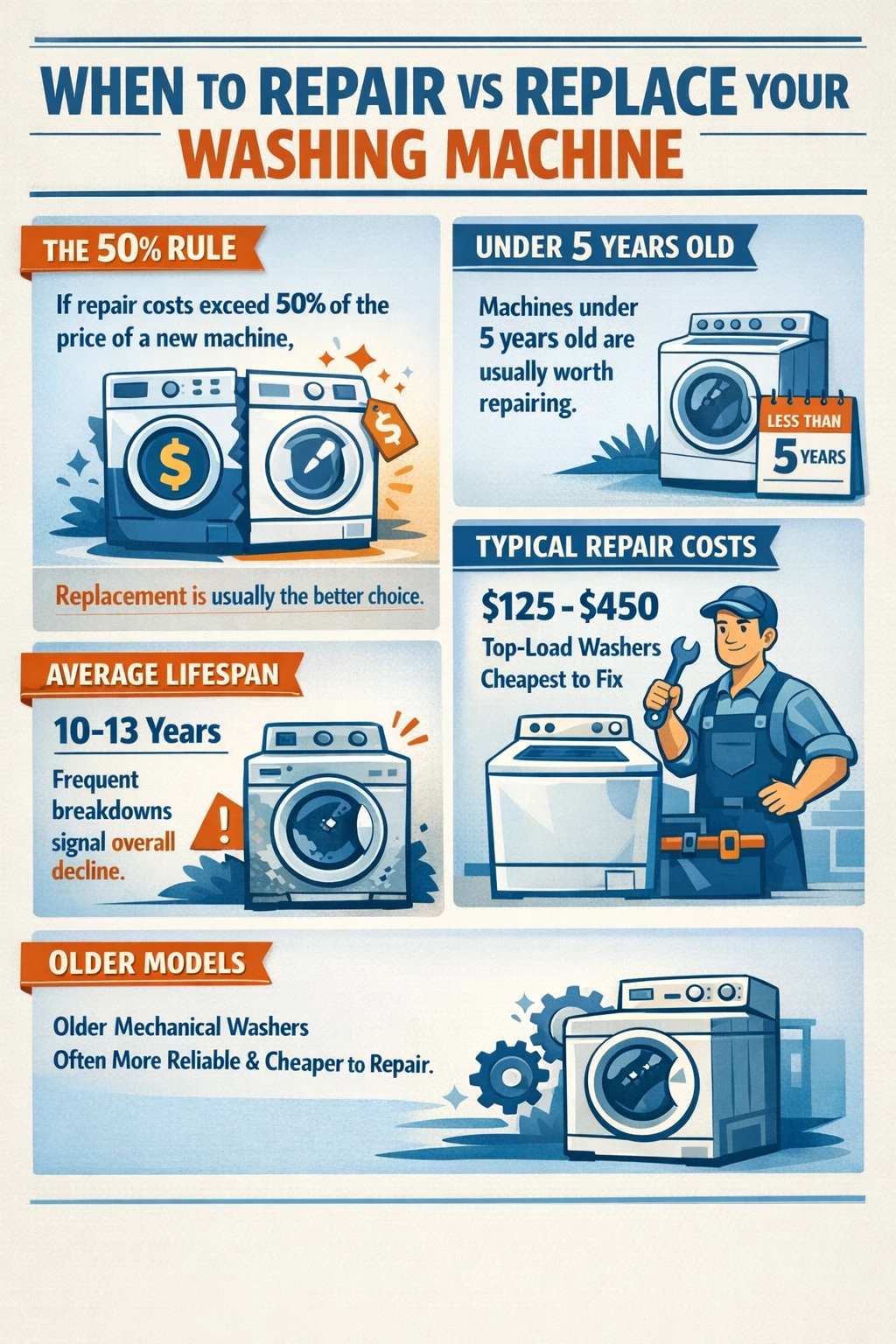
- A washing machine’s average lifespan is 10 to 13 years, but with proper care it can reach 15 years or more.
- If repair costs exceed 50% of what a comparable new machine would cost, replacement is usually the smarter financial move.
- Machines under five years old are almost always worth repairing, assuming parts are available and the issue isn’t catastrophic.
- The median cost of an out-of-pocket washer repair is around $155, though complex jobs like drum or motor work can reach $300 to $500 or higher.
- Frequent breakdowns – more than one or two repairs in a single year – are a strong signal that the machine is in a general decline, not just dealing with an isolated problem.
- A new machine is not automatically better; many modern washers have shorter practical lifespans than older models because of complex electronics and proprietary parts.
Repair vs. replace: the honest answer
 The most useful rule of thumb is the 50% rule. If fixing your washer will cost more than half the price of buying a new one, replacement starts to make more financial sense. A repair that costs $200 on a $700 machine? Worth doing. A $450 repair bill on that same machine? That’s getting into territory where you’re paying a lot to preserve something that’s already showing its age. Age matters too. Washers built to last between 10 and 13 years means a machine that’s 3 years old is almost certainly worth repairing. One that’s already 11 or 12 years old and has hit its first major breakdown is a different story – that breakdown is rarely the last. We see this pattern often enough: a homeowner spends $180 fixing a drainage issue in October, then calls back in February with a different problem, and by summer the machine needs something else entirely. The individual repairs aren’t outrageous, but they add up faster than people expect. At some point you’re financing a machine that’s in a slow decline.
How much does washing machine repair actually cost?
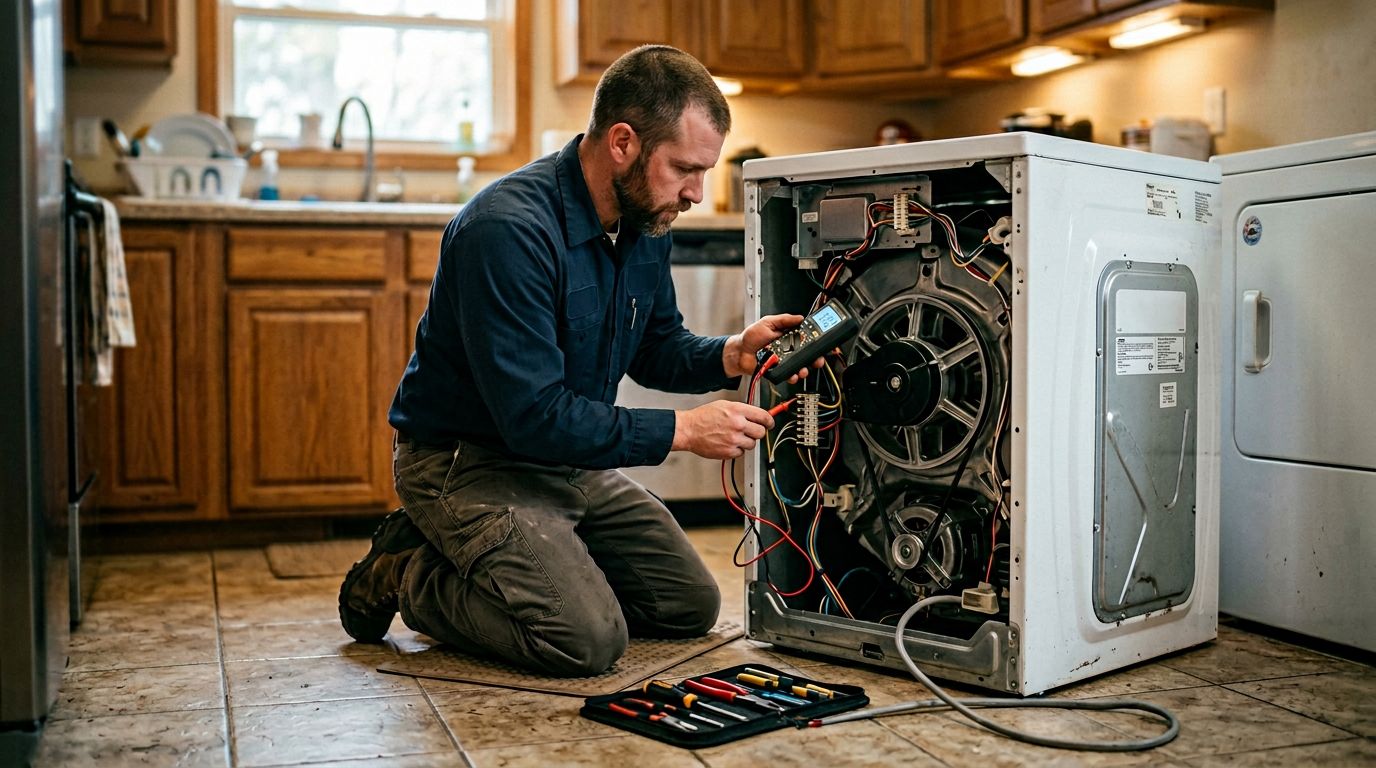 Repair costs vary depending on what broke and what type of machine you have. According to industry data, the typical range for a washer repair runs from $125 to $450, with an average around $180. But that number shifts based on the type of machine. Top-load agitator washers tend to be the least expensive to repair, with median repair costs around $129. High-efficiency top-loaders come in around $165. Front-load machines, with their more complex designs and pricier parts, average closer to $171 for out-of-pocket repairs. The problem type matters a lot too. A leaking washer might cost $50 to $200 to fix, depending on the source. A drainage issue runs $100 to $250. Control panel problems tend to be more expensive – around $173 as a median – and a broken drum can push well past $400. That’s where the numbers start getting uncomfortable compared to replacement cost. One thing to know going in: most repair services charge a diagnostic fee of $75 to $150 just to come out and assess the machine. That fee usually rolls into the repair cost if you proceed, but if you get the quote and decide not to fix it, you’re still out that money. It’s not a gotcha – it’s just how the economics of a service call work.
DIY vs. calling a pro
Some repairs genuinely are DIY-friendly. Clearing a clogged drain pump, replacing a door latch, or cleaning a clogged filter are all things a reasonably handy homeowner can handle with YouTube and a Saturday afternoon. Parts for common models are widely available online, and a repair that costs $150 from a technician might run $20 in parts if you do it yourself. Other repairs – replacing drum bearings on a front-loader, fixing a motor, or diagnosing an intermittent control board fault – are genuinely complex. A front-load drum bearing replacement involves taking most of the machine apart. Get that wrong, and you’ve created a bigger problem. For those jobs, a professional diagnosis and repair is worth what you pay for it. Among homeowners who used professional repair services, independent repair shops had the highest satisfaction rates – higher than going through the retailer or the manufacturer directly. Something worth keeping in mind when you’re searching for help.
Signs your washer is telling you it’s done
 Some problems are worth fixing. Others are the machine sending a pretty clear message. A one-off issue on a 4-year-old machine? Fix it. An odor you can’t get rid of, or mold in the drum, might just need a thorough cleaning and a habit change – leaving the door open after each cycle, for instance. A control panel that occasionally glitches could be a firmware issue that costs nothing to address if the manufacturer has a patch available. But there are situations where replacement is the more honest answer. If your machine is more than 10 years old and has needed multiple repairs in the last year or two, the pattern is telling you something. Parts for discontinued models become harder to find and more expensive when they do show up. A repair that costs $300 today might be followed by another $200 repair in six months because worn machines tend to fail in clusters – one part goes, and the stress it put on adjacent components shows up later. Rust or corrosion inside the drum is a replacement signal. So is a leak originating from the drum itself – drum repairs run $400 to $900 and often aren’t worth it on an older machine. Consistently poor cleaning performance that doesn’t improve with maintenance is another one. Nobody wants to rewash the same load twice. There’s also the energy efficiency angle. Washers manufactured in the 1990s used roughly 70% more energy than modern machines, according to the U.S. Department of Energy. If your machine is old enough to have been through a couple of presidents, the ongoing operating cost might be eating into whatever you’re saving on repairs.
The case for keeping your old machine (it’s stronger than you think)
Here’s something that doesn’t get said enough: a lot of newer washers aren’t actually better than the machine you’re thinking about replacing. Modern high-feature washers come loaded with electronics, WiFi connectivity, and digital controls. Those components fail. And when a control board goes on a 6-year-old Samsung or LG, the repair quote often comes back at $400 to $500 – for a machine that cost $700 to begin with. Proprietary circuit boards aren’t cheap, and some manufacturers make it very difficult to get parts outside of their own service network. Older machines with mechanical controls, direct-drive motors, and fewer electronic components are often easier and cheaper to repair. The parts are standardized. The failure modes are predictable. A good independent technician has seen the same problems a hundred times and can fix them efficiently. We hear from homeowners in places like Burke Mountain and Maillardville who have held onto older top-loaders for 15 or 20 years with minimal trouble. They do basic maintenance, avoid overloading, and don’t wash rugs or heavy blankets in a standard machine. Those machines keep running. The calculus changes completely if you’d be replacing a 15-year-old workhorse with something that’s designed around electronic features rather than mechanical reliability. Speed Queen is one brand that comes up consistently when durability is the priority – their basic models use simpler mechanical systems and some carry warranties of up to seven years. They’re more expensive upfront, but worth considering if you’re at the replacement stage and want something built to last.
Practical steps before you make the call
Before you decide anything, do a few things. Check your warranty. Most manufacturer warranties last one year, but some brands offer extended coverage. If you’re within the warranty period, contact the manufacturer before spending a dollar on an independent repair. Also check whether you have a home warranty – these service plans sometimes cover washer repairs and can significantly reduce your out-of-pocket cost. Look for recalls. Check the manufacturer’s website and the Health Canada recalls database to see if your specific problem is part of a known issue. Some manufacturers will cover repairs or even replace units for recurring problems that affected a production run. Read the manual – really. A surprising number of “broken” washers have a simple fix. A rebalanced load, a cleaned filter, a reset cycle. Before calling anyone, spend 20 minutes with the manual and a YouTube search for your make and model. You might save yourself a $100 service call. Get a diagnosis before committing. A good technician will tell you exactly what’s wrong and what it will take to fix it before you authorize anything. That information is what you need to make the 50% rule calculation. If a technician can’t or won’t explain the diagnosis clearly before asking for approval, find a different technician. Think about just the washer. If your dryer is fine, you don’t need a new set. Dryers are simpler machines and tend to outlast washers. Replacing a washer alone – and keeping a working dryer – is almost always cheaper than buying both, and there’s nothing wrong with a mismatched laundry room.
Frequently asked questions
People in Coquitlam and the surrounding area ask us versions of these questions all the time. Here are the ones that come up most often, answered directly.
Is it worth repairing a washing machine that’s 10 years old?
It depends on the repair. Ten years is right at the edge of a washer’s typical lifespan, so you need to weigh the cost carefully. If the repair is minor – under $150 or so – and the machine has otherwise been reliable, fixing it makes sense. If you’re looking at a $300+ repair on a 10-year-old machine that has already had other issues, replacement is probably the better long-term move. The 50% rule applies here: if the repair exceeds half the cost of a comparable new machine, lean toward replacement.
What are the most common washing machine problems that are worth repairing?
Drainage problems, minor leaks, a faulty lid switch or door latch, clogged drain pumps, and excessive vibration from worn shock absorbers are all generally worth fixing. These repairs tend to fall in the $100 to $250 range and don’t indicate that the machine is fundamentally failing. Control panel issues and drum problems are more expensive and need to be evaluated against the machine’s age and overall condition before committing to the repair.
How can I make my washing machine last longer?
A few habits make a significant difference. Don’t overuse detergent – residue buildup causes clogs and mechanical wear over time. Check the water supply hoses monthly for cracking or brittleness, and replace them every five years as a precaution regardless of how they look. Clean the drum monthly using a commercial washer cleaner or a hot cycle with white vinegar. For front-loaders, dry the door gasket after each use and leave the door cracked open – standing water in that rubber seal is how mold takes hold. Avoid overloading, and don’t put items in the machine that aren’t meant for standard home washers: rugs, pillows, and heavy comforters put uneven stress on the drum and bearings.
Should I repair just the washer or replace the whole set?
Unless your dryer is also having problems, repair or replace only what needs attention. A working dryer has no reason to be swapped out just for aesthetics. Dryers are simpler machines with fewer failure points, and they regularly outlast the washers they’re paired with. If you do eventually need to replace both, that’s the time to shop for a set – but don’t spend money replacing something that’s working fine.
What should I look for when hiring a washing machine repair service?
Look for independent repair shops over manufacturer service centers or retailers – survey data consistently shows higher satisfaction rates with independent shops. Read reviews on Google. Ask whether the technician has experience with your specific brand and the type of machine you have (front-load and top-load machines have different failure modes). Make sure they’ll give you a clear diagnosis and repair quote before you authorize anything. If the quote is vague or the technician can’t explain what’s wrong, that’s a problem.
Wrapping up
The repair vs. replace decision comes down to three things: how old the machine is, what the repair will cost relative to replacement, and whether this is an isolated problem or part of a pattern. A young machine with a fixable issue is almost always worth repairing. An old machine with recurring problems and an expensive repair quote in front of you is usually telling you it’s time to move on. And a newer machine that happens to have failed early? Get that diagnosis first – it might be simpler and cheaper than you fear. At Appliance Repair Coquitlam, we handle washer repair across Coquitlam and the surrounding area, along with dryer repair, fridge repair, dishwasher repair, and most other household appliances. If you’re not sure what you’re dealing with – whether that’s a washer that won’t drain, a dryer that won’t heat, or something that’s making a noise you’ve never heard before – give us a call. We’ll help you figure out whether it’s worth fixing, and if it is, we’ll fix it right.