You loaded the dishwasher, ran a full cycle, and pulled out plates that look like they went through absolutely nothing. Here’s what’s actually causing that, and what you can do about it before calling anyone. Dishwashers are supposed to make life easier, not create more work. When yours starts leaving food residue, cloudy glasses, or gritty dishes, it’s frustrating in a specific way because you already did the work of loading the thing. At Appliance Repair Coquitlam, we hear this complaint regularly, and the good news is that the fix is usually something a homeowner can tackle on a Sunday afternoon without special tools. Coquitlam’s water supply tends to run on the harder side, which matters more than most people realize. Mineral buildup is one of the sneakiest causes of dishwasher cleaning problems, and it compounds over time. If your machine has been running fine for years and suddenly seems to have given up, the water is often part of the story.
Key takeaways
- A clogged filter is the most common cause of a dishwasher not cleaning dishes properly, and it takes less than five minutes to remove and rinse.
- Water entering your dishwasher should be around 120 degrees Fahrenheit too cool and the detergent won’t dissolve, too hot and it can actually stop working.
- Blocked spray arm nozzles reduce water pressure to the point where dishes come out looking untouched; a toothpick clears most clogs.
- Rinse aid is not optional if you have hard water it helps water sheet off dishes instead of leaving spots and film behind.
- How you load the dishwasher matters as much as any mechanical factor; nesting bowls and overlapping plates block water flow completely.
- Running an empty cycle with 3 cups of white vinegar in the bottom of the tub can clear enough buildup to restore noticeably better cleaning results.
Why your dishwasher isn’t cleaning dishes
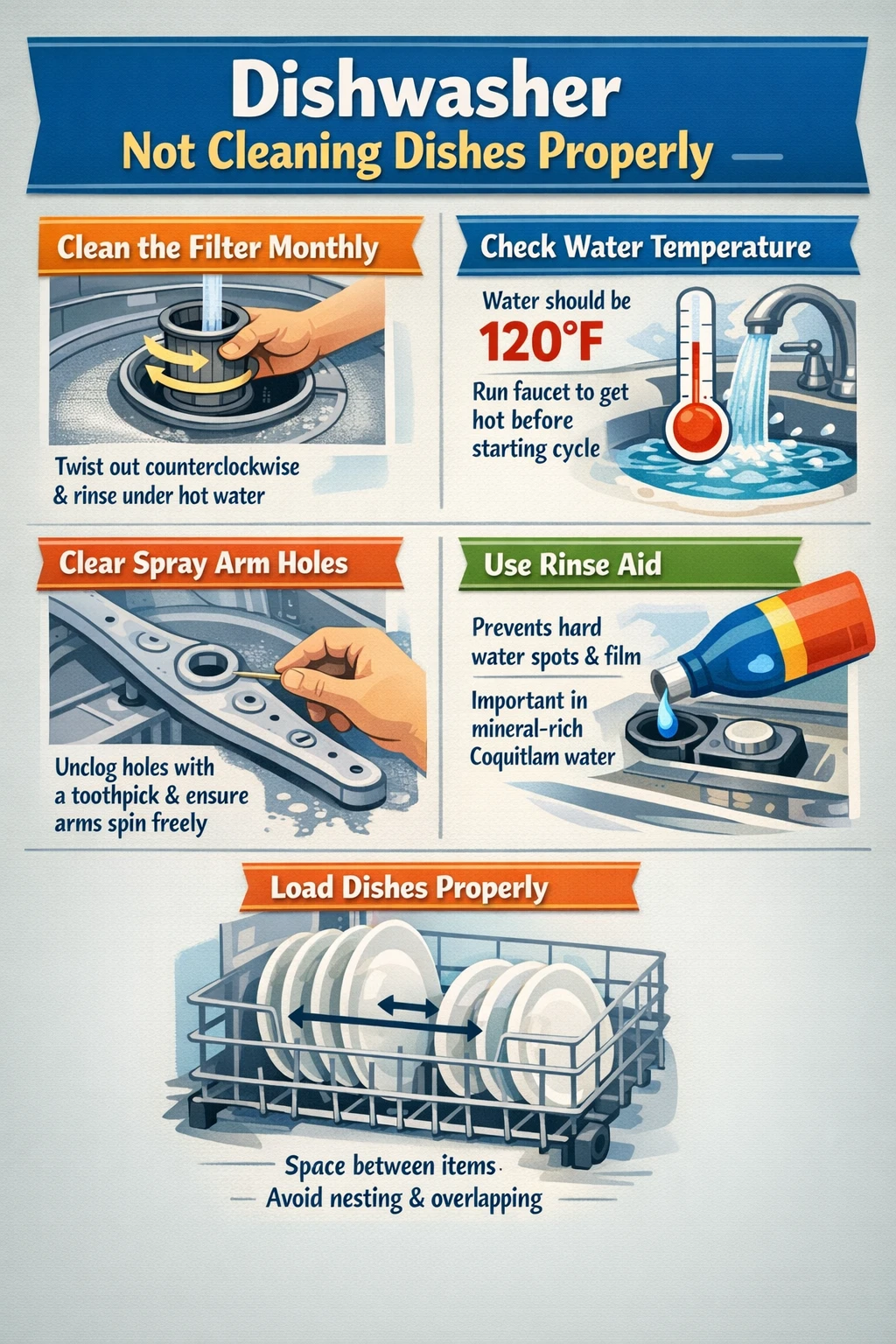
Most of the time, a dishwasher leaving food residue comes down to one of four things: a dirty filter, blocked spray arms, the wrong water temperature, or a loading problem. These aren’t rare or complicated failures they’re the everyday reality of a machine that runs multiple times a week and doesn’t get much maintenance attention in return. The filter is the place to start. Dishwashers made after roughly 2010 almost all have a manual-clean filter rather than the older self-grinding style. That filter sits at the bottom of the tub, below the lower rack, and it catches food particles so they don’t recirculate onto your dishes. When it gets clogged and it will dirty water has nowhere to go except back onto everything you just loaded. 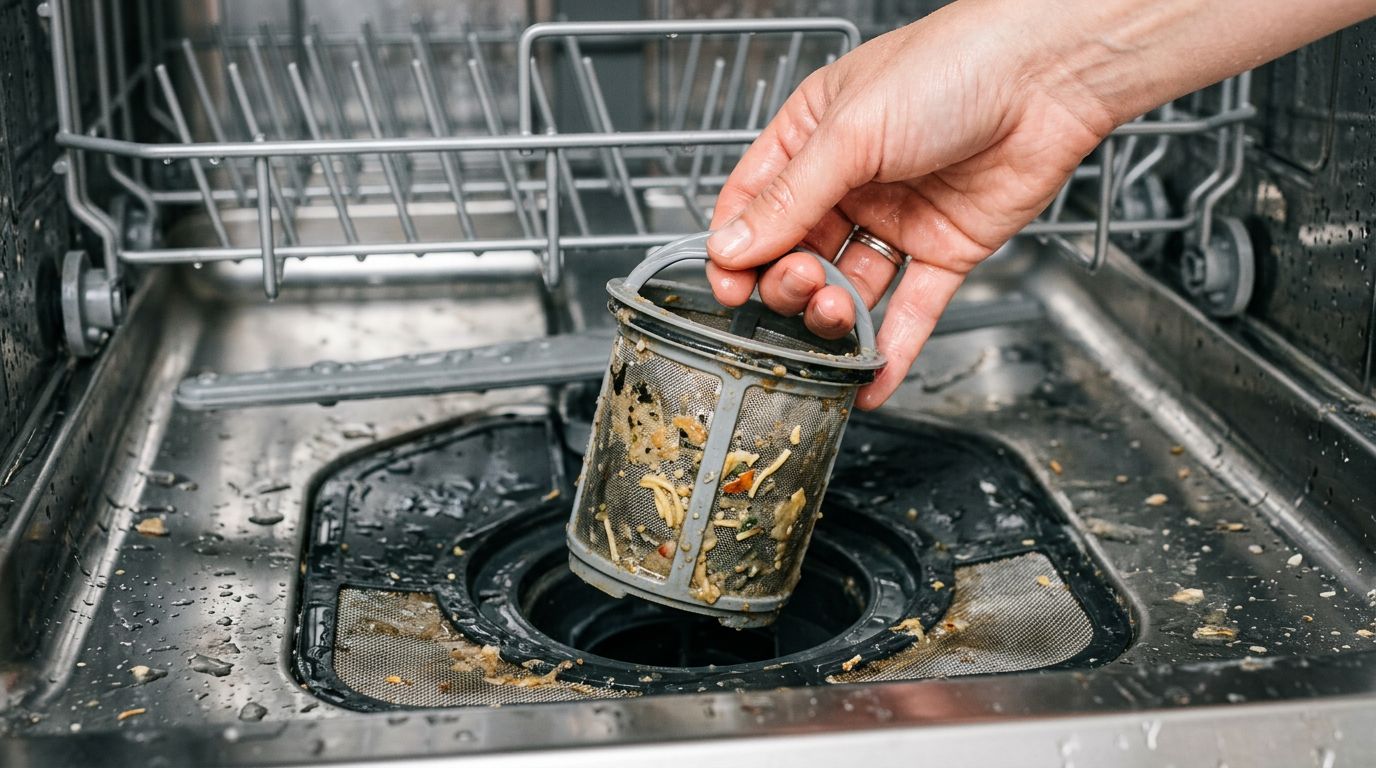 We see this constantly, especially in homes where the filter has never once been cleaned since the machine was installed. Spray arm clogs are the other big one. Those rotating arms have small holes that jet water at pressure across your dishes. Hard water deposits and food debris narrow those holes over time until the water barely trickles through. Dishes on the top rack are usually the first to suffer, since the upper spray arm tends to clog before the lower one.
How to clean the filter (and why it matters so much)
Pull out the lower rack and look at the bottom of the tub. You’ll see a cylindrical piece, usually in the center or toward the back corner, sometimes covered by a flat mesh screen. Twist it counterclockwise and it should lift right out. Some models have two pieces a coarse mesh screen and a finer cylindrical filter inside it. Both need cleaning. Rinse both pieces under hot running water. Most of the debris comes off easily. If there’s built-up calcium or stuck-on gunk, soak them in warm soapy water for a few minutes and use a soft brush an old toothbrush works perfectly. Don’t use anything abrasive. The mesh is more delicate than it looks, and scratching it can compromise how it filters. Reinstall it, make sure it locks into position, and you’re done. The whole job takes maybe four minutes. Do this once a month and you’ll prevent most of the issues that make people think they need a new dishwasher. One honest note: if you’ve never cleaned the filter and the machine is a few years old, prepare yourself. It can be pretty unpleasant the first time. That’s normal. It gets easier.
Clearing clogged spray arms
Most spray arms lift or unscrew from their mounts without tools, though some older models need a single screw removed first check your manual if it doesn’t pull off easily. Once you have the arm out, hold it up to a light and look through the jets. Blocked holes are obvious. Use a toothpick or a thin piece of wire to clear each hole. Work from the outside in, then rinse the arm thoroughly under hot water. Shake it to dislodge anything loose. When you reinstall it, give it a spin by hand to make sure it rotates freely. 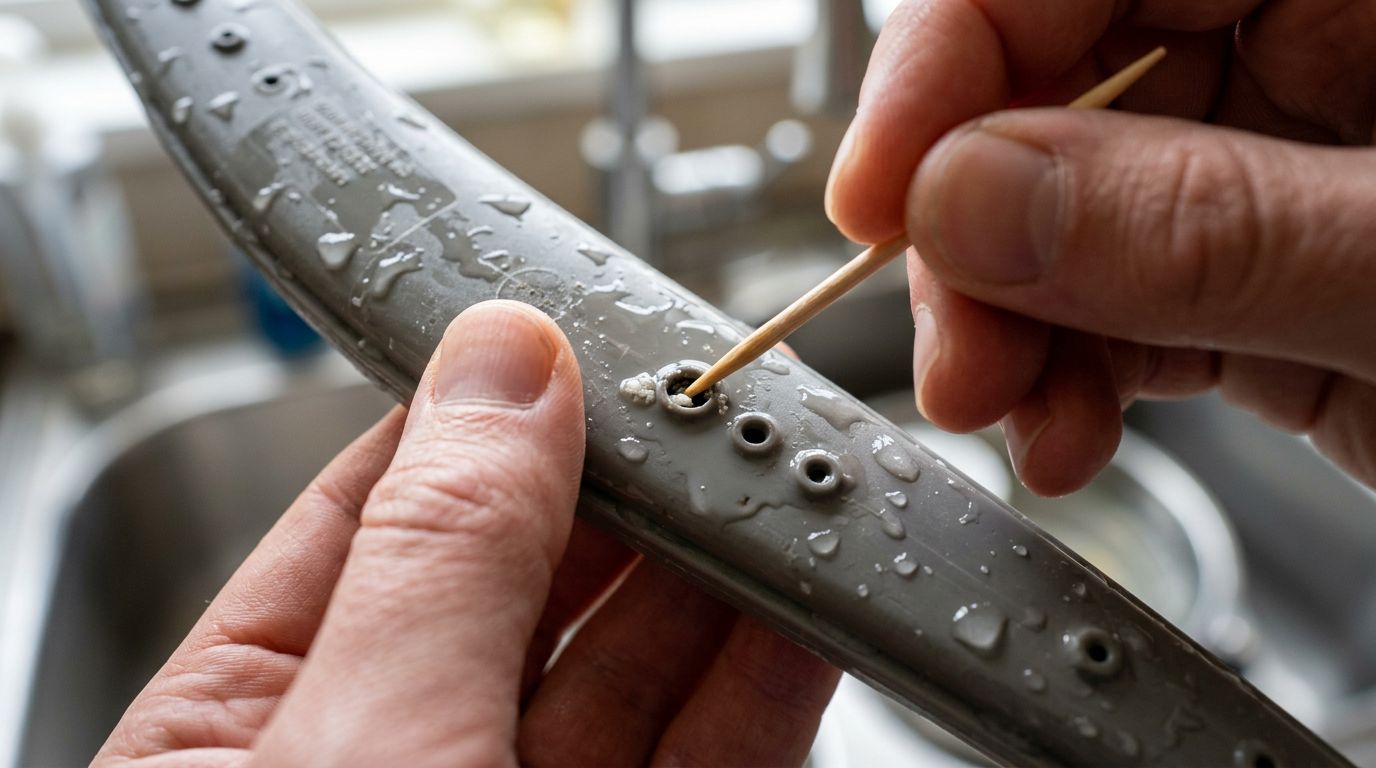 If it catches on anything, that dish or bowl on the lower rack is blocking it. This is actually a surprisingly common call we get from homeowners in Burke Mountain and Westwood Plateau a tall pot or casserole dish parked in the wrong spot stops the spray arm from spinning, and suddenly nothing on the bottom rack is getting clean. The machine sounds fine, runs fine, and the dishes come out dirty. It’s not a mechanical failure. It’s geometry.
Water temperature and detergent issues
For your detergent to actually work, water needs to be around 120 degrees Fahrenheit when it enters the machine. Below that, the enzymes in modern dishwasher detergent don’t activate properly. Above 140 degrees, those same enzymes can break down before they’ve done anything useful. Most home water heaters are set somewhere in that range already, but if yours runs cool or the dishwasher is located far from the water heater, hot water might not be arriving at full temperature. A simple fix: run your kitchen faucet for 30 to 60 seconds before starting the dishwasher. This clears the cold water sitting in the line and lets the machine start its cycle with genuinely hot water from the first fill. On detergent pods and pacs tend to outperform powder and gel at reducing film on dishes. One thing worth knowing: if you’re using pods, place them in the bottom of the tub rather than the dispenser. When a pod sits in the dispenser, it doesn’t release until the main wash cycle starts. If your machine does a pre-wash cycle first, that pre-wash runs with no soap at all. Dropping the pod loose in the tub means it starts working from the beginning, including during the pre-wash. This makes a real difference in how clean the dishes actually come out. Never use regular dish soap in a dishwasher. It creates thick foam that pours out the door and doesn’t clean anything. That’s one mistake you only make once.
Loading mistakes that kill cleaning performance
Proper loading is genuinely half the battle, and most of us were never really taught how to do it right. Cups and glasses go on the top rack, angled downward so water drains off rather than pooling. Large flat items like platters and baking sheets belong on the sides of the bottom rack, not flat across the middle where they block water from reaching everything behind them. Bowls go face-down and angled. If two bowls are touching and face the same direction, neither one gets clean on the inside. The cutlery basket is where people consistently go wrong. Spoons in particular love to nest against each other and emerge from the cycle still dirty. Mix up your silverware forks next to spoons next to knives. If your machine has a cutlery drawer on the door, that’s actually better for cleaning since items lay flat with space between them. One thing to avoid: don’t put large pots or pans in the bottom rack alongside a normal load. They block water flow to everything around them, and they often don’t come out clean anyway. Big items are better off hand-washed, or run as their own separate load. 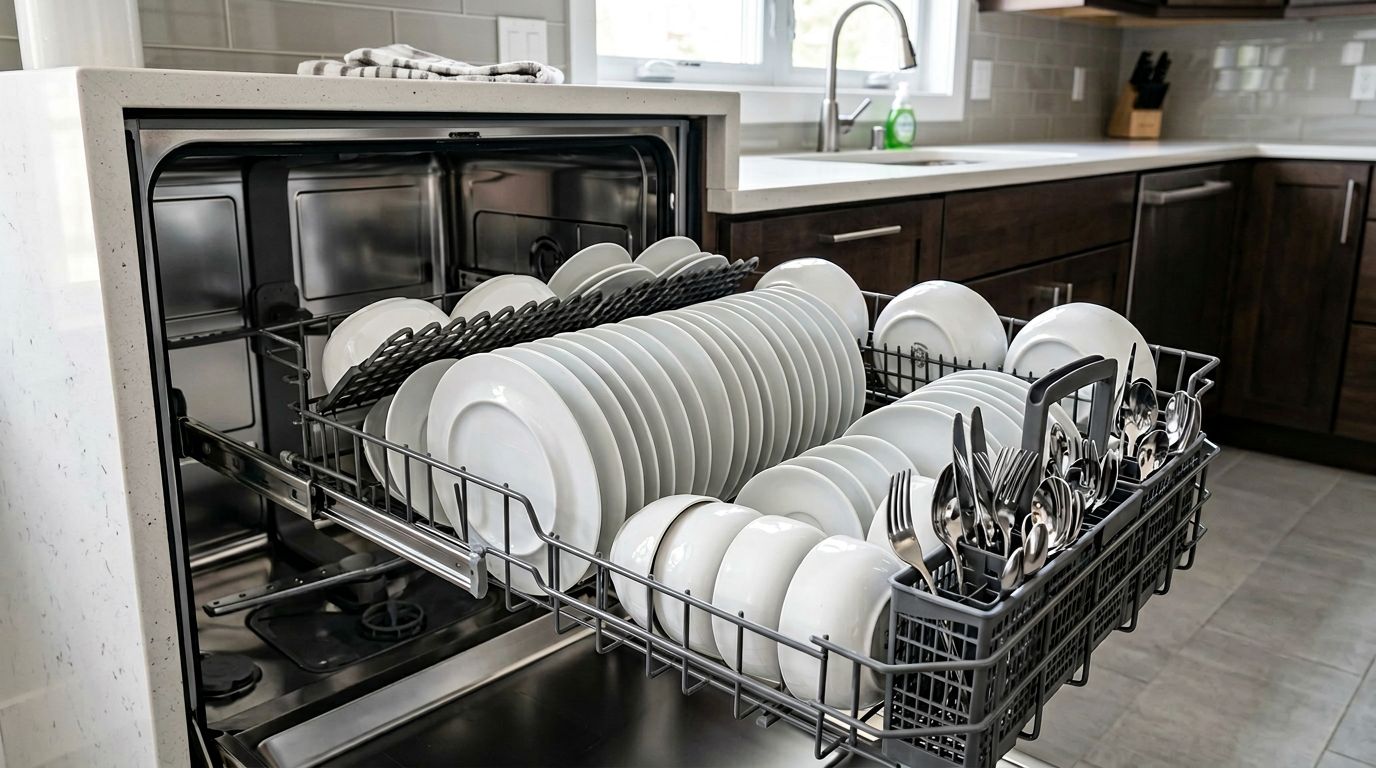
When the problem is hard water
If your dishes come out with a white film or cloudy finish, especially glassware, hard water mineral deposits are almost certainly involved. This is a widespread issue across Coquitlam, and it affects both the dishes and the machine’s internal components over time. Rinse aid is the most direct solution. It helps water sheet off surfaces instead of leaving behind droplets that dry into spots. Keep the rinse aid dispenser filled when it runs low, film and spotting come back quickly. Some people use white vinegar as an alternative; it works, but it needs to be placed in an upright bowl on the top rack rather than poured into the tub, since the machine drains whatever’s sitting at the bottom before the first wash begins. For ongoing buildup inside the machine, running an empty cycle with 3 cups of white vinegar in the tub once a month goes a long way. For heavier mineral accumulation, a dedicated dishwasher cleaner tablet or a product like LemiShine will do more thorough work. If hard water is a persistent issue throughout your home, a whole-home water softener is worth considering it protects your dishwasher, your pipes, and your other appliances at the same time.
Frequently asked questions
These are the questions we hear most often from homeowners dealing with dishwasher cleaning problems. If you’ve worked through the steps above and still aren’t sure what’s going on, these might point you in the right direction.
How often should I clean my dishwasher filter?
Once a month is the right target for most households. If you run the dishwasher daily or regularly wash dishes with a lot of food residue, every two to three weeks is better. The filter is the most neglected maintenance item on any dishwasher, and a clogged one doesn’t just cause dirty dishes it puts extra strain on the wash motor and shortens the machine’s lifespan. The good news is that cleaning it takes under five minutes once you know where it is.
Why do my dishes still have food on them after a full cycle?
This usually points to one of three things: a clogged filter recirculating dirty water, spray arms that aren’t spinning or aren’t jetting water properly, or a loading arrangement that’s blocking water flow. Check the filter first since it’s the easiest to inspect. Then manually spin each spray arm to confirm it rotates without obstruction. If both of those check out, try reloading the dishwasher with more space between items and see if the results improve on the next cycle.
Is it worth repairing a dishwasher that isn’t cleaning, or should I replace it?
If the machine is under ten years old and the issue is a clogged filter, blocked spray arms, or a dispenser problem, repair is almost always the better call. These are inexpensive fixes. If the machine is older and has a failing wash motor, a broken inlet valve, or a faulty control board, the repair cost starts to approach what a new unit would cost, and replacement makes more sense. A technician can usually tell you which situation you’re in after a quick diagnosis and a good one will give you that assessment honestly before recommending anything.
What’s causing soap residue on my dishes?
Soap residue usually means one of two things: the water isn’t hot enough to fully dissolve the detergent, or too much detergent is being used. Check that your water heater is set to around 120 degrees Fahrenheit and try running the kitchen faucet before starting a cycle. If you’re using powder or gel detergent, try switching to a pod or pac they’re pre-measured and tend to dissolve more completely. Also check that the detergent dispenser door is opening fully during the cycle; if a tall dish is blocking it, detergent sits in the closed dispenser for the entire wash.
When should I call a professional instead of troubleshooting myself?
If you hear grinding, buzzing, or a hammering sound during operation, that points to a mechanical component the wash motor, drain motor, or inlet valve that needs a hands-on look. Water leaking onto the floor, a machine that stops mid-cycle repeatedly, or error codes on the control panel are also situations where DIY troubleshooting has probably reached its limit. The International Association of Certified Home Inspectors maintains useful guidance on what constitutes normal versus abnormal dishwasher behavior if you want a reference point before calling anyone.
Wrapping up
Most dishwasher cleaning problems come down to maintenance that hasn’t been done a filter full of debris, spray arms caked with mineral deposits, or a loading habit that’s blocking water from doing its job. Start with the filter, clear the spray arms, confirm your water temperature is in range, and give the interior a vinegar cycle. That combination fixes a large majority of the issues homeowners run into. If you’ve worked through all of that and the machine still isn’t cleaning properly, or if something sounds or looks mechanically wrong, that’s the point to bring in a professional. At Appliance Repair Coquitlam, we handle dishwasher repair across Coquitlam and the surrounding area including folks in Ranch Park and beyond who’d rather not spend their weekend chasing down an appliance problem. Give us a call and we’ll figure out what’s actually going on.