That grinding, banging, or roaring sound coming from your washing machine during spin cycle is your appliance telling you something is wrong – and the sooner you figure out what, the better your chances of avoiding a costly breakdown. This article walks you through the most common causes, what each noise actually means, and how to decide whether it’s a DIY fix or time to call someone in. Washing machines are built to handle a lot, but they’re not indestructible. Years of heavy loads, uneven laundry, and daily use add up – and eventually, something starts to complain. At Appliance Repair Coquitlam, we hear from homeowners all over Coquitlam who’ve been quietly tolerating a noisy washer for months, figuring it’ll sort itself out. It rarely does. The noise usually gets worse, and what started as a $150 bearing replacement can turn into a full machine replacement if you wait too long. Older homes in the area – particularly those built before the early 2000s – often have laundry rooms on upper floors or in closets where noise travels fast. A washing machine making loud noise in one of those setups isn’t just annoying. It’s a real disruption to the whole house.
Key takeaways
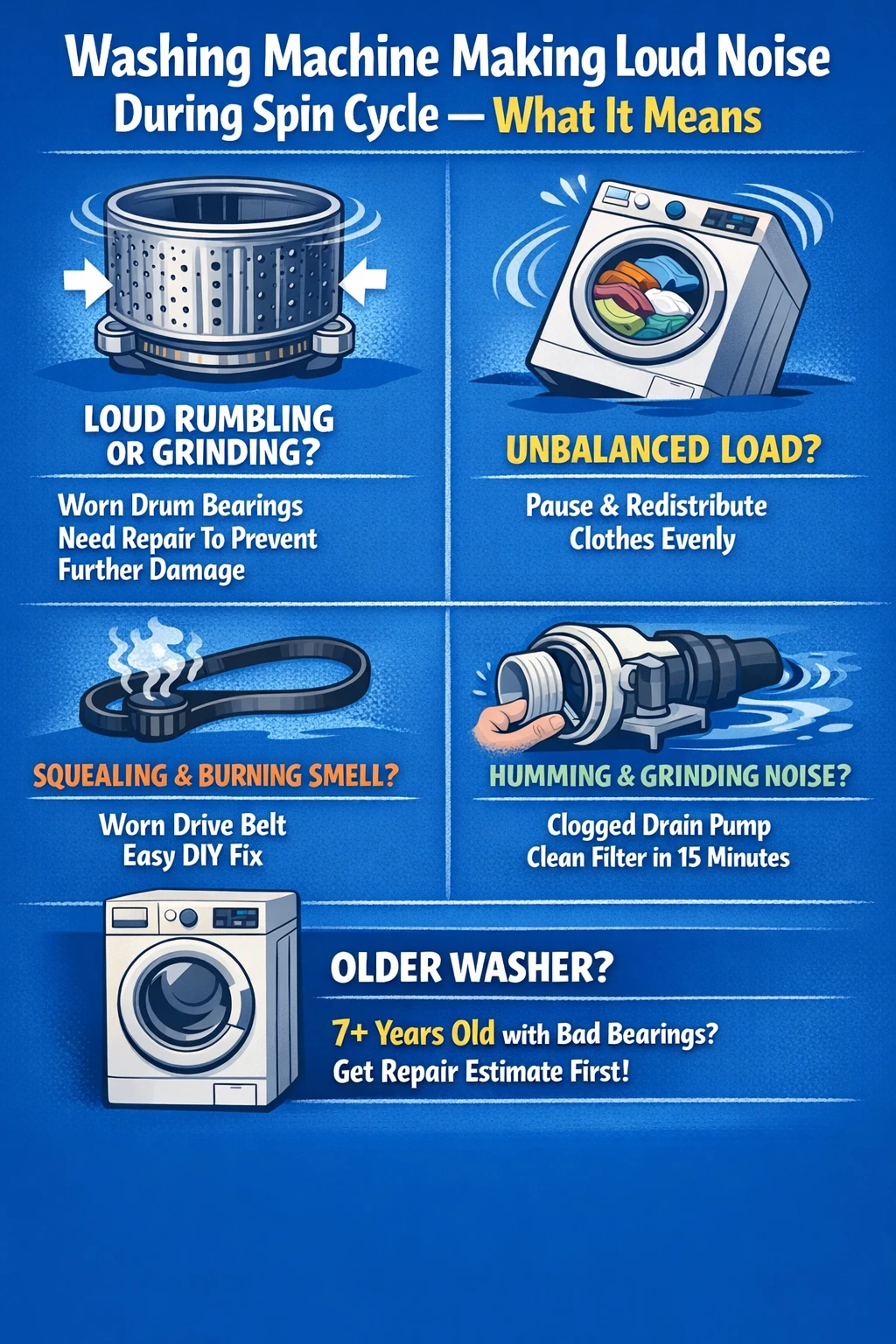
- A loud rumbling or grinding noise during spin cycle is most often caused by worn drum bearings, which will continue to worsen if left untreated.
- An unbalanced load is the simplest and cheapest problem to fix – pause the cycle, redistribute the clothes, and restart before assuming anything is broken.
- Drum bearing replacement on most top-load washers is considered an intermediate-to-advanced repair, and on many machines the cost of parts and labor may approach the cost of a replacement unit.
- A squealing or burning smell during spin usually points to a worn drive belt, which is a more accessible repair for someone comfortable with basic disassembly.
- A clogged drain pump can create humming and grinding sounds, and is often the easiest fix – many front-load washers have an accessible filter you can clear yourself in under 15 minutes.
- If your washer is 7 years or older and the bearings are confirmed bad, get a repair estimate before committing – sometimes replacement makes more financial sense.
What a washing machine making loud noise during spin cycle usually means
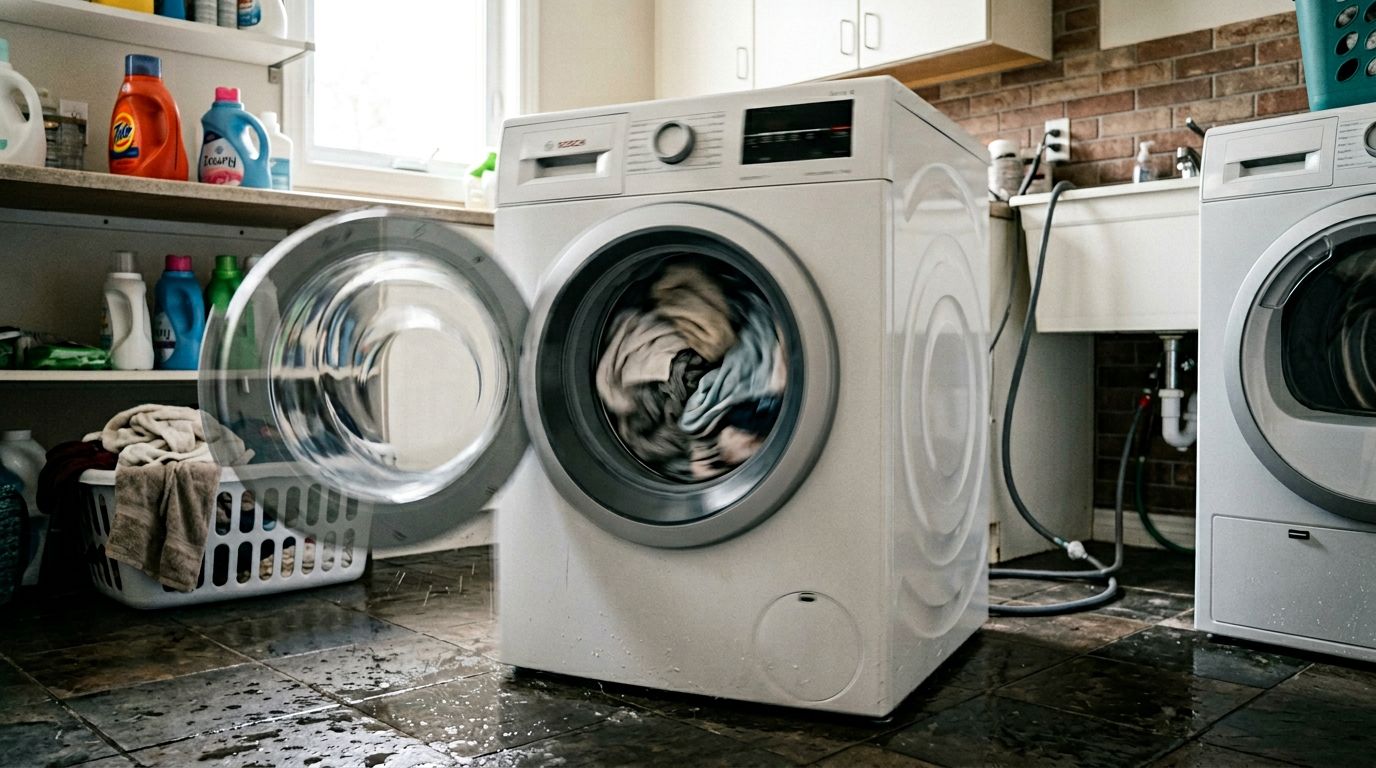 The spin cycle puts more mechanical stress on a washing machine than any other part of the wash. The drum is spinning at high speed, sometimes with several kilograms of wet laundry inside, and every worn or loose component gets amplified at that speed. So when something’s wrong, spin cycle is almost always where you’ll hear it first. The most common cause is worn drum bearings. These small components sit behind the drum and allow it to rotate smoothly. Over time – especially on machines that have seen a lot of heavy or unbalanced loads – the bearings wear down and start producing a rumbling, growling, or grinding noise that gets louder as the spin speed increases. If you can spin the empty drum by hand and hear a scraping or rumbling sound, that’s a strong sign the bearings are the problem. Beyond bearings, loud spin cycle noise can come from a worn drive belt (usually a squealing sound), a broken suspension rod or spring (loud clunking or banging), a clogged drain pump (humming or grinding when draining), or simply an uneven load that’s thrown the drum off balance. Identifying which type of noise you’re hearing is the first step to figuring out what’s actually going on.
Breaking down the noise types: what each sound is trying to tell you
Not all washer noise is the same, and the type of sound matters a lot. A rumbling or growling that builds with spin speed is almost always mechanical – bearings or a motor component. A sharp bang or clunk that happens at irregular intervals usually points to something shifting around, whether that’s an unbalanced load or a loose suspension part. Squealing is its own category. A high-pitched squeal during spin, sometimes accompanied by a faint burning smell, typically means the drive belt is worn or slipping. The belt transfers power from the motor to the drum, and when it starts to fray or lose tension, it’ll let you know. This is one of those repairs that’s annoying to do but not especially complicated if you’re comfortable removing the back panel and working around the motor. A humming or buzzing sound – especially when the machine should be draining – often points to the drain pump. Coins, buttons, lint, and small clothing items can get lodged in the pump filter and cause it to work harder than it should. On most front-load machines, the drain pump filter is accessible from the front lower panel. Clearing it out takes about 10 minutes and costs nothing. We see this fairly often with front-loaders, and it’s always worth checking before assuming the problem is something more serious.
The unbalanced load situation
Worth giving this its own space, because it’s responsible for more “my washer is broken” calls than almost anything else. If your machine is banging and vibrating during spin – maybe even moving across the floor a bit – the first thing to check is the load itself. 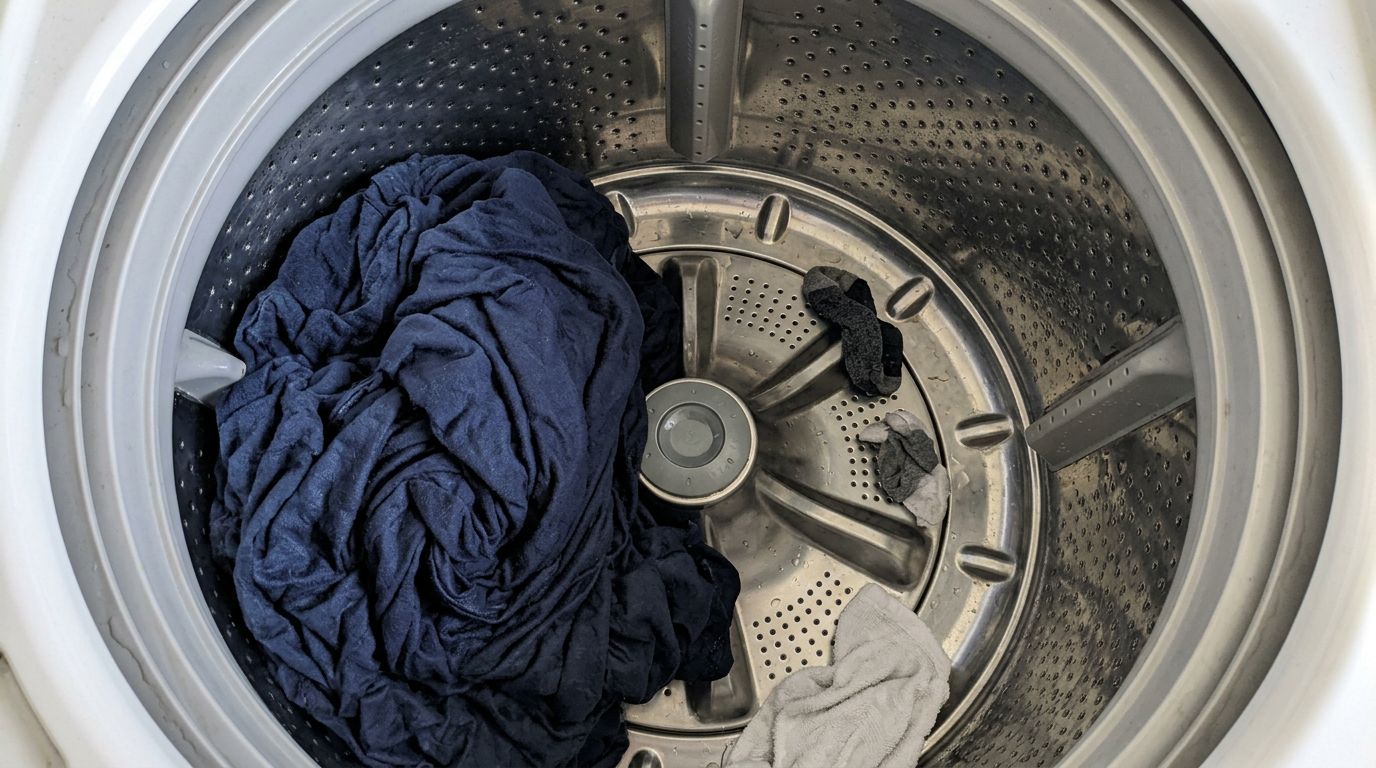 A single heavy item, like a duvet or a thick hoodie, can clump on one side of the drum during spin. The drum then becomes uneven, and the whole machine shakes and bangs to compensate. The fix is straightforward: pause the cycle, open the lid or door, and redistribute the laundry so the weight is spread around the drum. If you’re washing something particularly heavy, throw in a couple of towels to balance it out. Also worth checking: is the machine sitting level? A washer that’s slightly off-level will vibrate and walk during spin. Most machines have adjustable feet at the base. Use a spirit level to check, then adjust until the machine sits firm and flat.
Drum bearings: the most common serious cause
If you’ve ruled out an unbalanced load and the noise is still there – especially if it’s a low, rhythmic rumble that gets louder as spin speed increases – you’re most likely looking at drum bearings. Here’s a quick test. With the machine empty and unplugged, try rotating the drum by hand. Does it turn smoothly and quietly? Or does it produce a rough, grinding, or crunchy sound? If the drum also moves or wobbles more than you’d expect, that’s another sign the bearings have worn significantly. On some machines, you’ll also notice the drum feels looser than it should. The bad news about bearing replacement is that it’s not a simple repair on most consumer washing machines. Accessing the bearings typically means removing the rear panel and partially disassembling the drum assembly – and on some top-load models, the bearings are pressed into the outer tub, meaning the outer tub itself may need to be replaced as a unit. That changes the repair math considerably. We get a lot of calls from homeowners in Burke Mountain and Westwood Plateau about this specific issue – both areas have seen a lot of new construction over the past 15 years, and many of those households are now hitting the 7-10 year mark with their original appliances, which is right when drum bearings tend to go. If your machine is in that age range and the bearings are confirmed bad, get a repair estimate and compare it honestly to the cost of a replacement. Sometimes repair is the right answer. Sometimes it isn’t.
Suspension rods, springs, and shock absorbers
Inside your washing machine, a set of suspension rods or springs holds the drum assembly and absorbs the movement during spin. They’re doing a lot of work, and over time they wear out. When suspension components fail, the drum has less to dampen its movement. You’ll usually hear loud banging or clunking during spin – sometimes the machine visibly shakes more than normal. If you push down on the empty drum by hand, a machine with good suspension will push back with some resistance. If it drops easily and bounces, the suspension is likely worn. The good news is that suspension rods and springs are generally less expensive to replace than bearings, and on many machines they’re more accessible. The part itself is usually modest in cost, and the repair involves removing the top or side panels to access the drum assembly. For a handy homeowner, this is a manageable DIY project. For anyone less comfortable with appliance disassembly, it’s worth having a technician take a look.
Drive belt and pulley issues
On belt-driven washing machines, the drive belt connects the motor to the drum and keeps everything spinning in sync. Over years of use, belts stretch, fray, and eventually crack. A worn belt usually announces itself with a high-pitched squealing noise during spin. You might also catch a faint rubber burning smell if the belt is slipping badly. In some cases, the drum may spin unevenly or not reach full speed at all. If the belt breaks completely, the drum won’t spin. Replacing a drive belt is generally considered one of the more approachable washing machine repairs. You’ll need to access the rear panel (on most top-loaders) or the front panel (on many front-loaders), remove the old belt, and fit the new one around the drum and motor pulley. The part is relatively inexpensive. While you’re in there, it’s worth checking the pulley itself for any signs of cracking or damage – a worn pulley can cause a new belt to fail prematurely. For a thorough overview of how belt and pulley systems work together, AppliancePartsPros on YouTube has a detailed video guide on washing machine noise diagnosis that walks through both components in real time.
The drain pump: often overlooked, easy to fix
The drain pump’s job is to push water out of the machine at the end of each cycle. When it gets clogged with debris – lint, coins, hair clips, small socks – it has to work harder, and that effort produces a humming, grinding, or buzzing sound, usually when the machine is draining. If you’re also noticing water sitting in the drum at the end of a cycle, or the machine is taking longer to drain than usual, that points even more strongly to a pump issue. 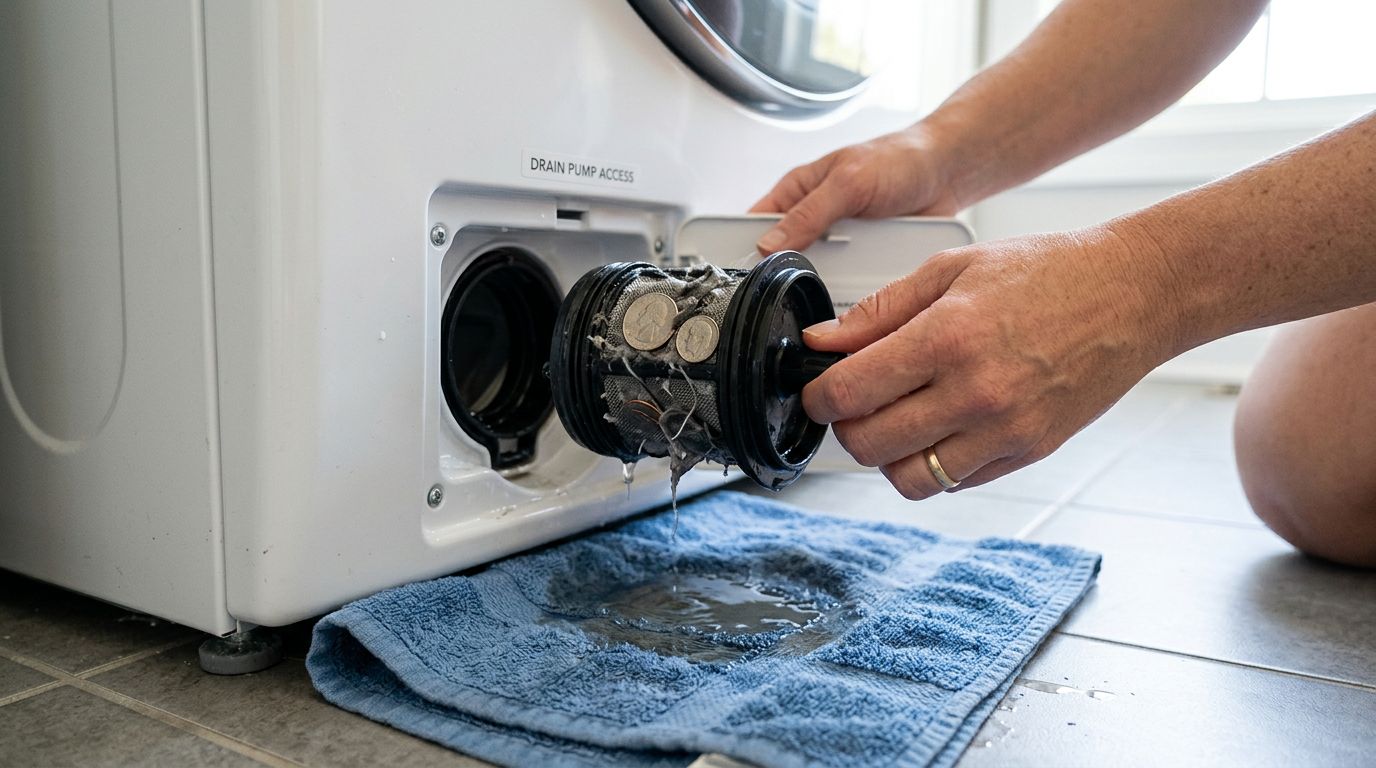 On most front-load washers, the drain pump filter is behind a small access panel at the bottom front of the machine. Put down some towels before you open it – there’s usually residual water in the filter housing. Unscrew the filter cap slowly, let the water drain into a shallow pan, then pull out the filter and clear any debris you find. Rinse it off, screw it back in, and run a short cycle to see if the noise is gone. If the pump itself is damaged or seized rather than just clogged, replacement is the next step. That’s a slightly more involved repair, but it’s straightforward for anyone with basic mechanical comfort. Health Canada’s guidance on appliance safety is worth a quick read before attempting any repair that involves water-connected components.
Frequently asked questions
A washing machine making loud noise is one of the most searched appliance problems – and for good reason. It’s stressful when something that’s supposed to run quietly starts making sounds you don’t recognize. Here are the questions we hear most often.
Is it safe to keep using a washing machine that’s making loud noises?
It depends on the cause. If the noise is from an unbalanced load or an unlevel machine, continuing to use it is fine once you’ve corrected the problem. If the noise is coming from worn bearings, it’s not immediately dangerous, but it will get progressively worse – and worn bearings can eventually damage the drum seal, which leads to leaking. A washing machine grinding away on bad bearings can also put extra stress on the motor over time. We’d recommend getting it checked rather than just tolerating the noise.
Can I diagnose the problem myself before calling a technician?
Yes, and you should. Start by spinning the empty drum by hand with the machine unplugged. Listen and feel for roughness or grinding – that points to bearings. Check that the machine is sitting level. Run a small test load and see if redistributing the laundry changes the noise. Look at the drain pump filter if it’s accessible. Most of these checks take less than 10 minutes and can save you a service call if the problem turns out to be simple.
How much does it cost to repair a washing machine with a loud spin cycle?
Costs vary depending on the problem and the machine. A drain pump filter clean-out costs nothing. A drive belt replacement might run $50-$150 in parts and labor. Drum bearing replacement is the most expensive common repair – parts and labor combined can range from $200 to $400 or more, and on some machines the repair cost approaches what you’d pay for a new entry-level unit. Getting a diagnosis before committing to repair is always smart.
Why does my washer sound louder than it used to but not obviously broken?
This is common with gradual bearing wear. Bearings don’t fail overnight – they deteriorate slowly, and the noise creeps up so gradually that it’s easy not to notice until it’s quite bad. If your machine is 6 or more years old and the spin cycle sounds noticeably louder than it once did – even if it’s not making a strange new noise – that progressive volume increase is worth investigating. A quick hand-spin test on the empty drum can tell you a lot.
Does the type of washer (top-load vs. front-load) affect what’s causing the noise?
To some degree, yes. Front-loaders rely more heavily on drum bearings and are more prone to bearing wear over time, partly because of how the drum is supported. They’re also more likely to have drain pump filter issues. Top-loaders use a different suspension system and are more prone to clutch assembly issues (which affect how the drum reaches spin speed) and coupler problems. The diagnostic approach is similar, but the specific parts involved can differ.
Wrapping up
A washing machine making loud noise during spin cycle is telling you something specific – the job is figuring out what. Start with the simple stuff: load balance, machine level, drain pump filter. If those are fine and the noise persists, the most likely culprits are drum bearings, a worn drive belt, or failing suspension components. The type of noise – grinding vs. squealing vs. banging vs. humming – is your best clue for where to focus. If you’re in Coquitlam and the diagnosis is pointing toward bearings or something you’re not comfortable tackling yourself, that’s what we’re here for. At Appliance Repair Coquitlam, we handle washer repair across the area, including the kinds of mechanical issues that are easy to misdiagnose without hands-on experience. Whether it’s a washer, a dryer, a dishwasher, or anything else in your home, we’re happy to take a look and give you a straight answer on what it’ll take to fix it – and whether fixing it makes sense. Give us a call and let’s figure out what your machine is actually trying to tell you.